Leo · 2026-11
Vendors quote private cloud storage in five different ways, and the quotes rarely compare line for line. The hardware quote excludes drives. The cloud quote excludes the fee you pay every time data moves. This breakdown splits the cost into its real lines so the comparison becomes possible.

Private cloud storage price is a one-time hardware line plus a short list of running costs you control, set against subscription fees that recur for as long as you keep the service. On the hardware side, published single-unit prices for NAS-class appliances currently run from $150 to $400 excluding shipping and tariffs. On the subscription side, a 10-user team pays recurring fees for as long as it stays subscribed. Below, every line item, plus a worked example you can copy with your own numbers.
Every serious quote reduces to four lines. Write them into your spreadsheet before you talk to anyone.
Three of the four lines are one-time or small. The fourth line, the subscription you avoid, is the one that compounds.
Two reference points, both from vendor pricing pages, both checked on November 5, 2026, and both subject to change, so re-verify before you budget.
Google Workspace publishes Business Starter at $7 per user per month on the annual plan, or $8.40 on the flexible plan, with 30 GB of storage per user listed for that tier. A team that mainly needs documents and mail is really paying for collaboration; the storage is a side dish. The published pricing page is Google Workspace pricing.
Backblaze B2 publishes object storage at $6.95 per terabyte per month, with download egress governed by its published free-allowance policy, so re-check the current allowance on the pricing page. This is the closer analogue to “raw storage in someone else’s data center.” The published pricing page is Backblaze B2 cloud storage pricing.
The recurring math is simple: annual subscription = per-unit price × quantity × 12. A 10-user seat license at $7 runs $840 per year. Two terabytes on B2 at $6.95 runs $166.80 per year. Both numbers recur. Neither buys you hardware.
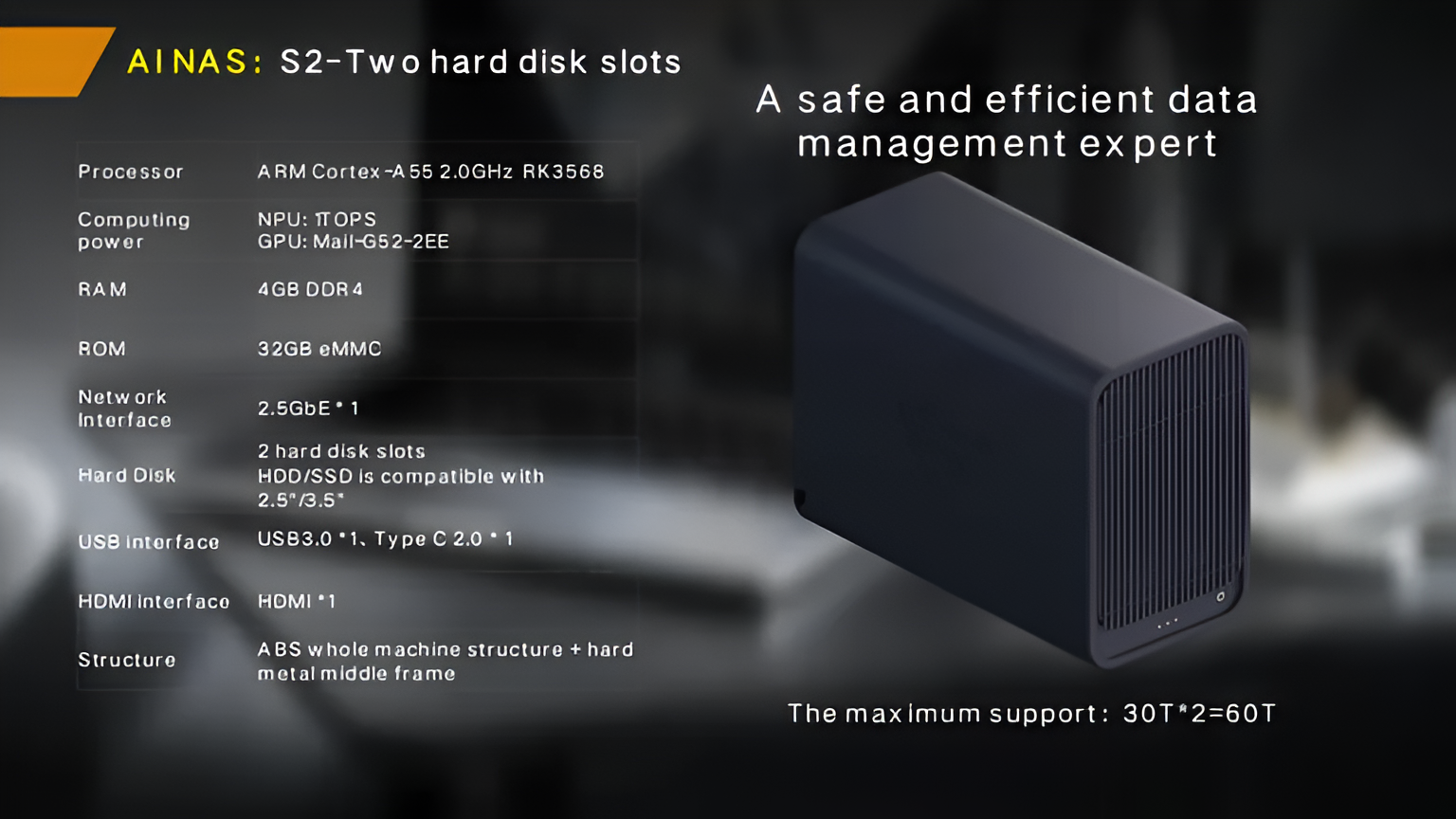
On the appliance side, the published single-unit reference prices in the woCyber line are $400 for the X4 (4 bays, Intel N100, dual 2.5GbE), $195 for the S2 (2 bays, 2.5GbE), $170 for the A2 Pro (2 bays, compact), and $150 for the A3 Pro (1 bay). All four figures are published single-unit reference prices in USD, excluding shipping and tariffs, and they adjust with configuration.
Drive costs do not appear in an appliance price. Budget them from current street listings in your market, and size them against the capacity math below. Volume and OEM pricing is on request, with the published MOQ at 100 units per SKU, rising to 1,000 units where a project needs a new PCB respin or new tooling, which matters when you are pricing a fleet rather than a desk.

Consider a hypothetical 10-person architecture practice. Their working set is about 2 TB of drawings, renders, and contracts, and they currently park a copy in object storage. The comparison, line by line:
| Cost line | Subscription path (B2 at $6.95/TB, checked Nov 5, 2026) | Private path (published S2 price $195 + local drive pricing) |
|---|---|---|
| Year 1 | $166.80 storage + egress on heavy restores | $195 appliance + drives (local pricing), one-time outlay |
| Year 2 | $166.80 again | Drives already paid; power only |
| Year 3 | $166.80 again | Same; hardware keeps working |
Price note for the table: the $195 figure is the published single-unit reference price excluding shipping, tariffs and drives, and the drive column stays a local variable on purpose.
The illustrative conclusion: if the drive budget lands anywhere near the appliance price, the entire hardware side, appliance plus drives together, lands in the same range as two to three years of the subscription line, and unlike the subscription it ends. The exact crossover depends on your drive prices and your electricity rate, which is precisely why you should run the arithmetic with local numbers instead of trusting anyone’s table, including this one.
One honesty check on the other side of the ledger: the private path puts the backup responsibility on you. A copy that lives only in the office is not a backup. If you keep one cloud copy as insurance, you still pay some subscription, just a smaller one.
Three come up most often. Power is the first: it is small but not zero, and the wattage line on the specification sheet is the number to use, not a guess. Drive replacement is the second: disks have finite lives, so mature buyers keep one spare on the shelf rather than negotiating an emergency purchase. The third is restore drills, because a backup that has never been restored is a hypothesis.
Compare that list against what a subscription quietly includes: redundancy, availability, and someone else’s 3 a.m. There is a real service in there. The fair comparison is not free versus paid; it is which costs you carry in cash and which in fees.
Capacity changes the hardware line fastest, and drives, not the appliance, dominate a storage build. A four-bay chassis filled with large disks can carry several times the chassis price in drive cost, which is why the table above keeps drives as their own variable.
Redundancy subtracts from usable capacity too. On a two-bay unit running RAID 1 (mirroring: every file is written twice, so one disk can fail without data loss), two identical drives present the usable capacity of one. The X4’s published RAID set spans 0/1/5/6/10, so parity modes trade capacity for resilience differently again. Sketch the capacity first, then price the disks, and only then compare appliance prices; doing it the other way round is how buyers end up with a chassis that cannot hold the drives the math requires.
The subscription line moves differently. Seat-based services grow with hiring, and terabyte-based services grow with data. A private box scales with neither payroll nor upload volume; it scales with drive bays, and only when you decide to add them.
Two workload families tip the math decisively. The first is egress-heavy work: if your team constantly pulls archives back down, per-download charges punish you in ways the sticker price hides. The second is retention-heavy work: video, compliance archives, or project files you must keep for years but rarely open. Paying monthly rent on data nobody touches is the worst seat at the table.
Where the cloud still wins is genuinely distributed access and elastic burst. If your workload is a hundred people uploading from three continents, the appliance conversation changes. Size honestly. For a deeper treatment of the exit-cost side, see cost-of-data-egress-from-cloud-business-nas“>the cost of data egress from cloud, and for the full budgeting framework, how-to-budget-for-on-premise-storage“>how to budget for on-premise storage.
If the math above points your way, the hardware line is where you start. Small teams tend to shortlist the products/s2-smart-nas“>woCyber S2 dual-bay smart storage hub, while teams carrying multi-terabyte working sets with more users lean toward the products/x4-nas-server“>woCyber X4 4-bay NAS server with its larger capacity ceiling. woCyber is an export brand of a Beijing-based manufacturer, with research and development in Beijing and mass-production manufacturing in Shenzhen. For the counter-argument in full, cloud-storage-subscription-cost-break-even-math-2026“>the cloud storage break-even math lays out when staying subscribed is the better call.

How much does private cloud storage cost for a small team?
The hardware line starts at published appliance prices between $150 and $400 per unit, plus drives priced locally. Add modest power and an hour a month of maintenance. Compare that against recurring subscriptions such as $6.95 per terabyte per month for object storage.
Is private cloud storage cheaper than Google Drive or similar services?
Over multi-year horizons for stable, retention-heavy data, usually yes, because the hardware is bought once while per-user and per-terabyte fees recur. For light, constantly-shared collaboration across many locations, subscription services often justify themselves.
What hidden costs should I budget for?
Power from the vendor’s wattage figure, one spare drive on the shelf, and your own maintenance time. On the cloud side, the hidden lines are egress charges and per-user seat growth as the team grows.
Does the appliance price include drives?
No. Published appliance prices cover the enclosure and its electronics. Drives are a separate line, and street prices vary by market, so budget them from current local listings.
Is my data private on a private cloud?
It stays on hardware you control, in your own environment, under your own access rules. That is a structural difference from a hosted service, not a certification claim, and it is verifiable because you operate the machine.
woCyber AI NAS runs detection, analysis and local storage on-device — your data stays on your own hardware, with no monthly cloud fees.
The storage box you already own may be able to run a language model, and buyers ask about this weekly now. the…
November 4, 2026Network attached storage vs direct attached storage comes down to who needs the data. Direct attached storage (DAS) ties drives to one…
November 4, 2026NVR storage capacity is the total drive space a network video recorder needs to hold footage from every camera over a chosen…
Ask our export team for the OEM/ODM cooperation guide and a written quotation.
