Leo · 2026-09
A broadband provider storage device supplier is judged on four things: what the hardware can be branded with, how the minimum order matches real subscriber demand, how a sample is validated without a factory visit, and which documents arrive with each shipment. woCyber builds these appliances as OEM/ODM platforms with MOQ (minimum order quantity) from 100 units per model.

Local storage is worth bundling because it adds a hardware line to a recurring service without adding a subscription the provider has to administer on the subscriber’s behalf. A cloud storage add-on puts the provider in the middle of somebody else’s account; a device in the subscriber’s home keeps the data on hardware the subscriber owns, and the provider stays out of the data path.
Broadband plans have converged on speed and price, so the differentiator has moved to what arrives with the connection: Wi-Fi hardware, streaming, cameras, backup. Storage sits in that group because it is the line item subscribers keep adding to — photo libraries, phone backups, 4K footage and camera recordings all land on the same shelf. If you run product for a regional provider, the question is rarely whether subscribers want local storage; it is whether you can package, brand and support it without hiring a storage team. That constraint decides both the model and the depth of branding.
A dual-bay appliance with one gigabit link and RAID 1 covers a phone-backup and photo-archive bundle without a switch upgrade. A dual-bay unit with 2.5GbE networking fits better once subscribers pull large media libraries across the home network. woCyber builds both tiers as OEM/ODM platforms, so a product team can compare them before committing a batch — the A2 Pro compact NAS at the entry point, and the S2 smart storage hub once multi-room media traffic justifies the faster port.
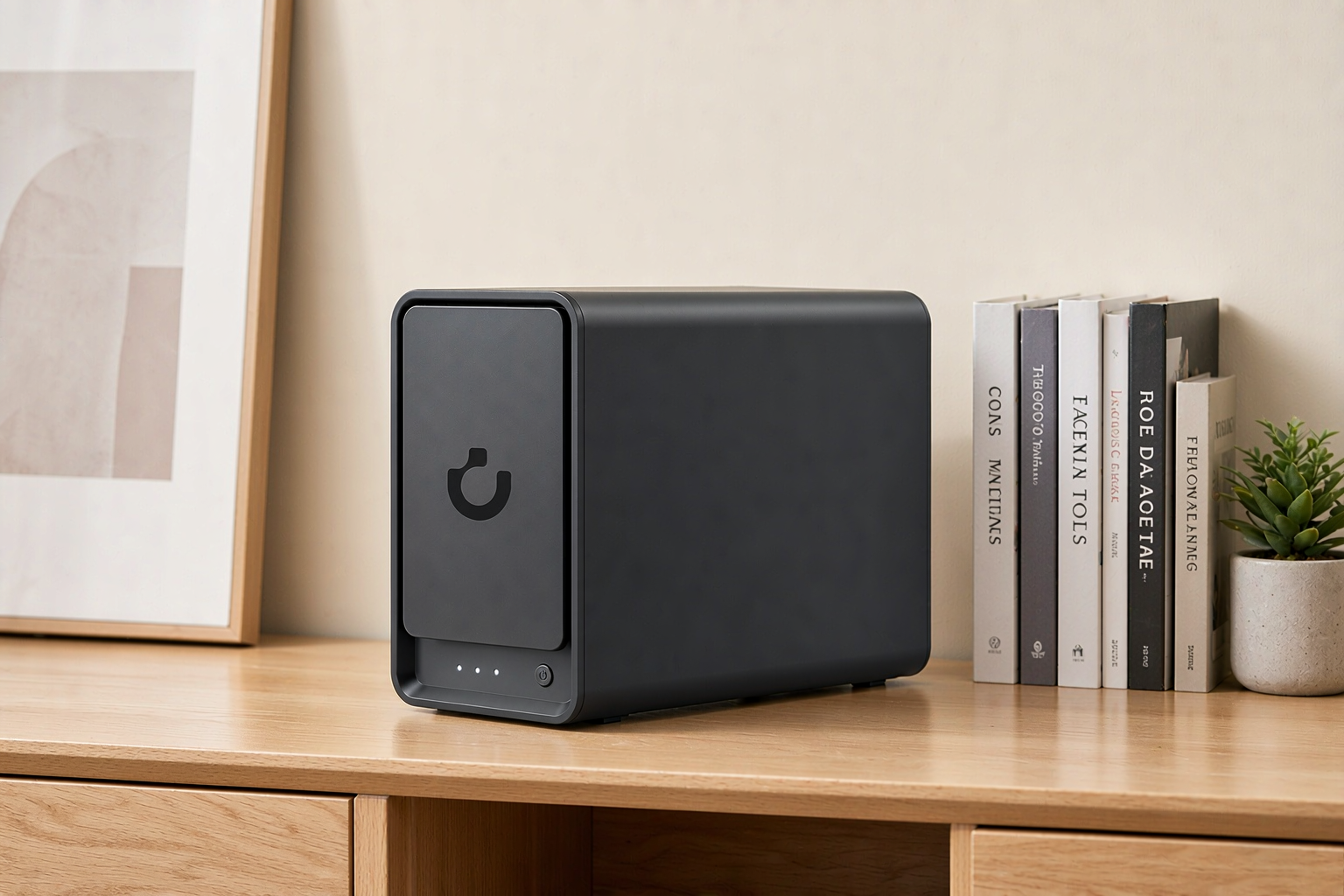
Four layers are brandable, and they can be adopted independently: the application, the on-screen interface, the physical logo and the retail packaging. None of them requires a new hardware design.
The white-label application is published to the iOS and Android app stores under the provider’s own developer account and name, so a subscriber who installs it never sees a third-party vendor in the store listing. First-run setup, login screens and the boot animation can be authored in the provider’s colors and wording. On the hardware, the logo is applied by silkscreen or laser engraving, and the model name on the unit and the carton follows the provider’s naming convention. Documentation, quick-start sheets and gift-box packaging are localized, and the power adapter variant matches the destination market. The division of ownership between the brand and the factory in a branded hardware deal follows the same logic as a private label NAS program for US brands, so it is worth settling that split in writing before artwork begins.
Firmware sits one level deeper, and this is where procurement teams should ask precise questions. The published options include a branded NVR (network video recorder) interface, custom AI event rules for camera-triggered recording, default retention policies that match the provider’s plan tiers, and branded OTA (over-the-air: firmware updates delivered to devices already in subscribers’ homes) release channels. Each is a platform configuration rather than a redesign, which is what keeps a first batch inside a normal product-cycle budget. The full option list sits on the OEM/ODM program page.
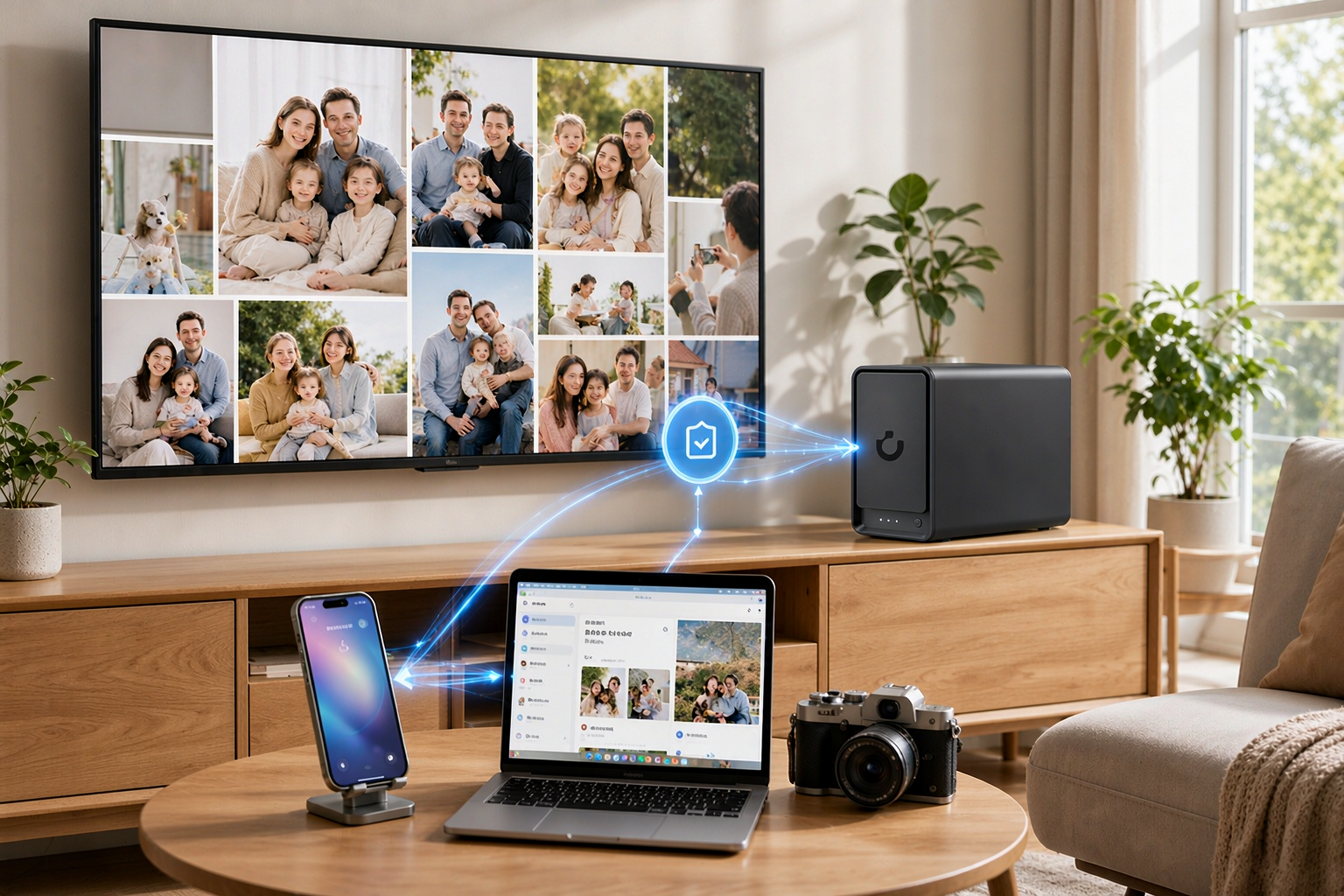
The floor is one MOQ batch per model, which is 100 units, and the practical question is how many months of subscriber demand one batch covers. That is arithmetic the provider already has the inputs for.
Annual device demand equals new subscriber activations multiplied by the attach rate; monthly demand is that figure divided by twelve; months of cover equals the batch size divided by monthly demand. Take a labeled planning example — illustrative, not a market forecast — of a provider activating 4,000 subscribers a year at an attach rate of 0.05 (5 in 100):
At that attach rate the MOQ floor is not the constraint: 200 units a year is exactly two batches. Change one input and the picture changes — at an attach rate of 0.01, annual demand is 40 devices and one batch becomes two and a half years of cover. That is the case where a provider should start with the entry-tier model only, or treat the first batch as a deliberate trial rather than a launch.
Because batches are planned per model, the assortment decision comes first. The table uses published single-unit reference prices and published maximum raw capacity so a provider can size the ladder before requesting a quotation.
| Bundle tier | Model | Drive bays | Maximum raw capacity | Network interface | Published reference price (USD, single unit) |
|---|---|---|---|---|---|
| Compact starter (single-drive) | A3 Pro | 1 | 30 TB | 1×GbE | $150 |
| Entry bundle (phone backup, photo archive) | A2 Pro | 2 | 48 TB | 1×GbE with RAID 1 | $170 |
| Mainstream bundle (multi-room media) | S2 | 2 | 60 TB | 1×2.5GbE | $195 |
| Power tier (small office, 4K workgroups) | X4 | 4 | 120 TB | 2×2.5GbE, link aggregation up to 5 Gbps | $400 |
These are published single-unit reference prices excluding shipping and duties, and they are subject to change; volume and OEM pricing are quoted per project on request with MOQ from 100 units. A provider that also sells camera recording as a tier should size that capacity separately from general file storage — our notes on sizing storage for camera retention walk through that calculation.
The sample stage proves four things at once: the branded app flow, the packaging artwork, the physical logo and the power adapter for the destination market. Samples are charged at the published single-unit price, and the fee is credited in full against the first mass-production order, so a rejected build does not become a sunk cost.
Most providers cannot fly engineers to Shenzhen at short notice, so acceptance work is usually split in three. A recorded walkthrough covers the SMT (surface-mount technology: the line that places components on the circuit board) and assembly areas, the burn-in room and the outgoing inspection station. Units are then checked against the provider’s own artwork and firmware build, ideally by someone who has never seen the device — first-run screens that confuse a new owner will confuse subscribers. Independent inspection can be arranged with SGS, Bureau Veritas or TÜV, and customer engineers are welcome on site for a formal audit of the mass production base in Shenzhen, where the units are built.
Production discipline is what makes a sample predictive. Every unit passes a 72-hour burn-in cycle, and 100% outgoing inspection means each unit is checked before packing, with the batch report archived so a later support question can be traced to a specific production run. Buyers comparing suppliers can read our notes on how US brands vet NAS server manufacturers before the first order.
Every shipment carries a documentation pack: the CE Declaration of Conformity, the FCC test report, RoHS and REACH declarations, the ISO 9001 certificate and the ONVIF conformance statement. For EU sales the CE marking applies and WEEE registration falls on the importer; for the UK the equivalent file is UKCA; for the US the FCC file is the one customs and retail partners ask for first.
Two of those documents have a procedural dimension worth understanding before launch. In the United States, a device containing a radio must complete FCC equipment authorization — through Certification or a Supplier’s Declaration of Conformity — before it is marketed or imported. Commercially, the importer of record needs an entry filing, and US Customs and Border Protection publishes the basic import and export requirements that apply. Neither step is exotic, but both go faster when the manufacturer’s files are complete and match the model numbers on the carton.
Four numbers tell a provider whether the bundle is working: attach rate, activation completion rate, first-line support contacts per 100 units shipped, and average storage fill after 30 and 90 days. Attach rate validates the planning arithmetic above; activation completion catches setup friction in the branded app; support contacts expose packaging or documentation problems that no lab test finds; fill rate shows when to introduce the next capacity tier.
Two habits make those numbers usable. Keep a batch identifier in the inventory record so a field failure is traceable to a production run rather than to “some units last year”. And agree one technical contact on each side — during evaluation our export engineering team answers within one working day, which matters most in the week the first batch is being prepared.
Yes. An OEM or ODM platform supplies the enclosure, board, firmware and application, and the provider’s brand is applied to the app, interface, logo and packaging. The provider defines the subscriber-facing experience and the plan tiers; the platform defines the engineering. Nothing in that split requires the provider to own a hardware design team.
MOQ starts at 100 units per model. The figure applies per model rather than per order, so a provider can launch with one tier and add models later without renegotiating. Samples are charged at the published single-unit price and the fee is credited in full against the first mass-production order.
No. The appliance is designed around local storage, so subscriber data sits on the device in the subscriber’s home and the provider is not in the data path. That removes the monthly cloud cost from the bundle economics and keeps the provider out of the data-processing role a hosted storage service would create.
CE, UKCA, FCC, RoHS, REACH and WEEE are covered by the documentation pack, alongside an ISO 9001 quality certificate and an ONVIF conformance statement for camera interoperability. Providers should confirm that certificate and report model numbers match the model numbers printed on the packaging before accepting the first shipment.
Within one working day. Evaluation questions cluster around artwork files, firmware configuration options, sample lead items and the documentation pack, so it is worth naming one technical contact on each side. Naming that contact before the first sample order is built saves a week of lost context later.
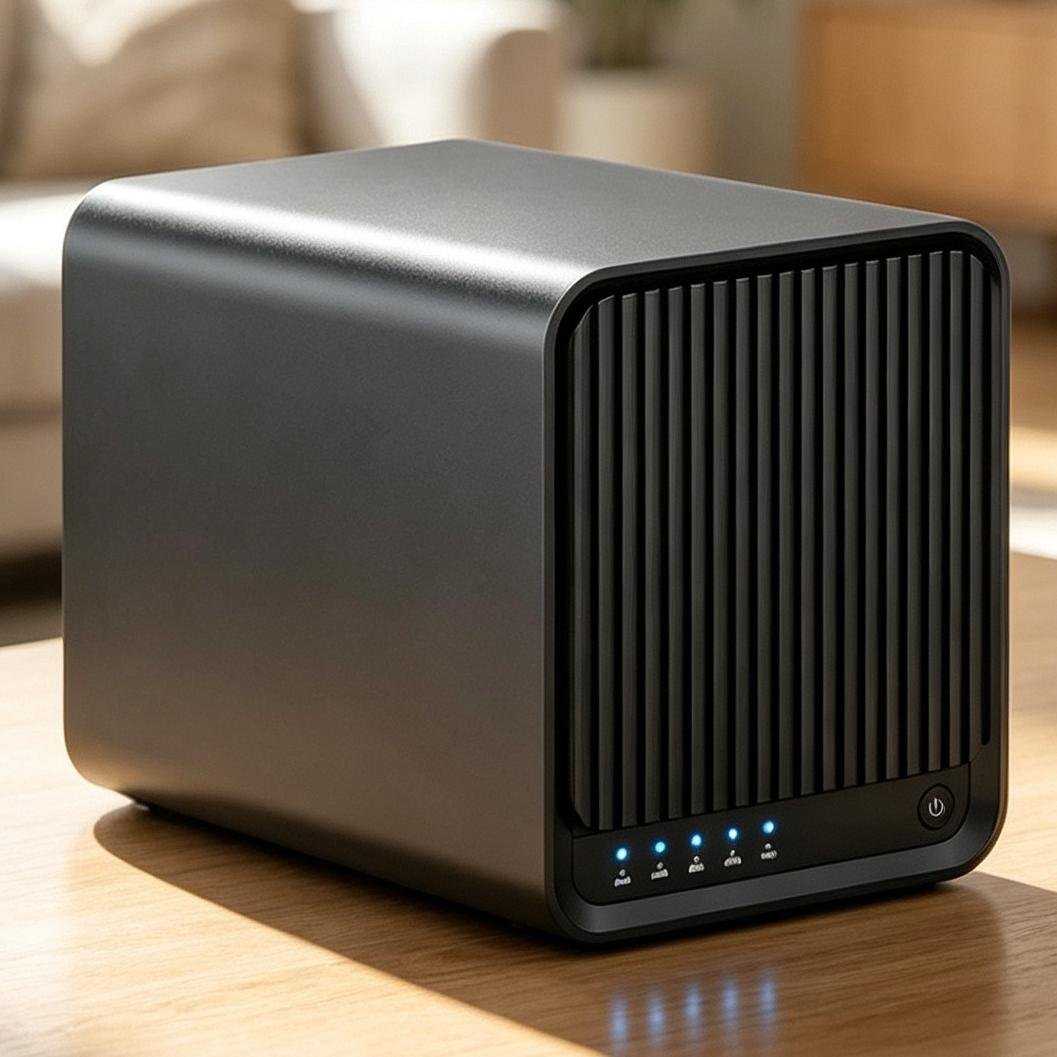
We are the factory: SMT to shipment under one roof, R&D in Beijing, mass production in Shenzhen. Factory-direct pricing without trading-company markups.
White Label NAS Program for Regional Distributors: SKU Ladder, Branding Rights and Launch Costs A white label NAS for regional distributors is…
October 1, 2026Retail NAS SKU for Big Box Channel Partners: How Retailers Specify a Storage Line A retail NAS SKU for big box channel…
September 30, 2026NAS Manufacturing USA: Sourcing Guide for 2026 Brands Most NAS manufacturing USA comparisons start with the assembly line. The invoice disagrees. On…
Ask our export team for the OEM/ODM cooperation guide and a written quotation.