Leo · 2026-09
A NAS private label program for US brands is a manufacturing partnership in which the factory supplies the hardware platform, firmware, mobile app and packaging while the brand controls the product name, app identity, channel and price. woCyber, the export brand of a Beijing-based storage hardware manufacturer with mass production in Shenzhen, runs these programs from 100 units per model.
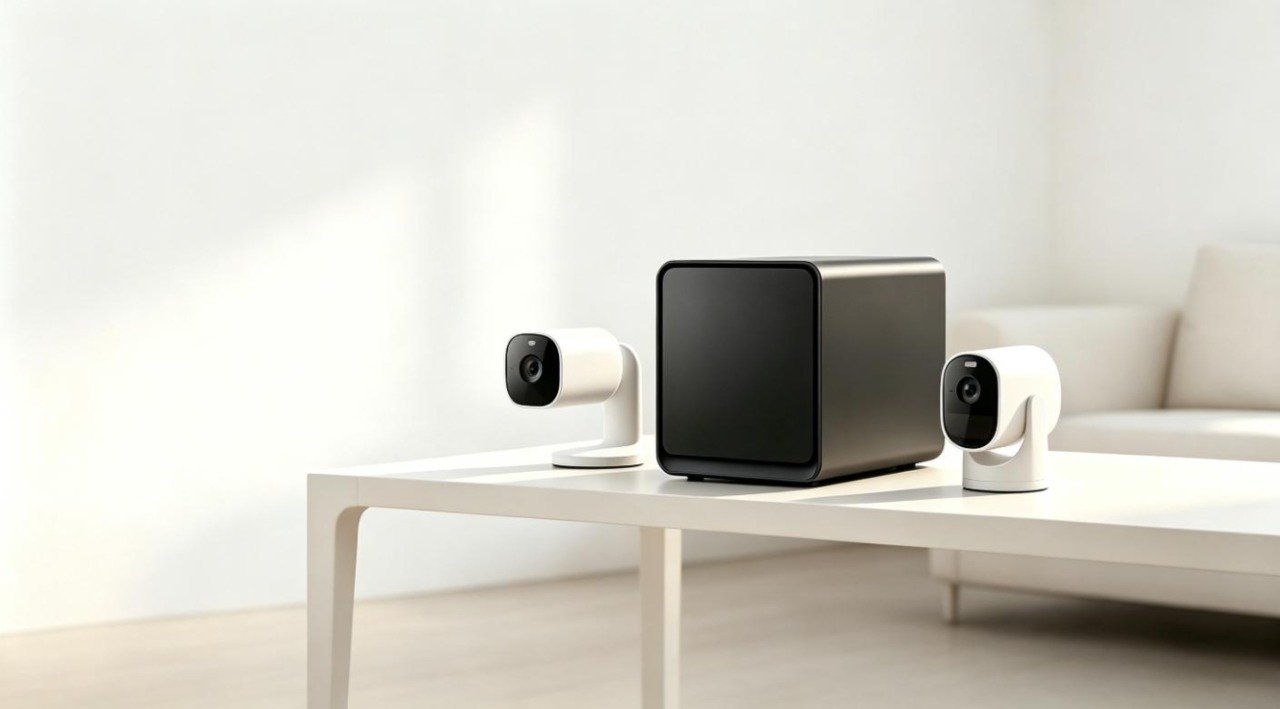
A private label NAS program covers everything between the bare hardware platform and the retail-ready box. The factory supplies the board, the chassis, the firmware image and the operating system, then applies the logo, builds the packaging and prepares the mobile app for store submission under the buyer’s developer account. The brand supplies the name, the market position, the channel and the demand forecast.
woCyber maintains five platforms, X4, S2, A2 Pro, A3 Pro and the S1 AiNAS Security Kit, each with a published OEM options matrix, so the choice between private label, OEM and ODM is a question of how deep the change goes rather than which factory is used. Private label changes identity, OEM reconfigures the platform, and ODM creates new hardware. Buying a stock unit and reselling it changes nothing except the price tag, which is why it produces no defensible SKU.
The A2 Pro is the value-tier platform and the usual starting point for an entry brand: a Rockchip RK3568 quad-core processor, a 1 TOPS NPU, 4 GB DDR4 memory, 16 GB eMMC boot storage, two 2.5″ SATA drive bays, 48 TB raw capacity, RAID 1 mirroring and one GbE port. That baseline stays fixed in a private label order; branding, configuration, app identity and packaging do not.
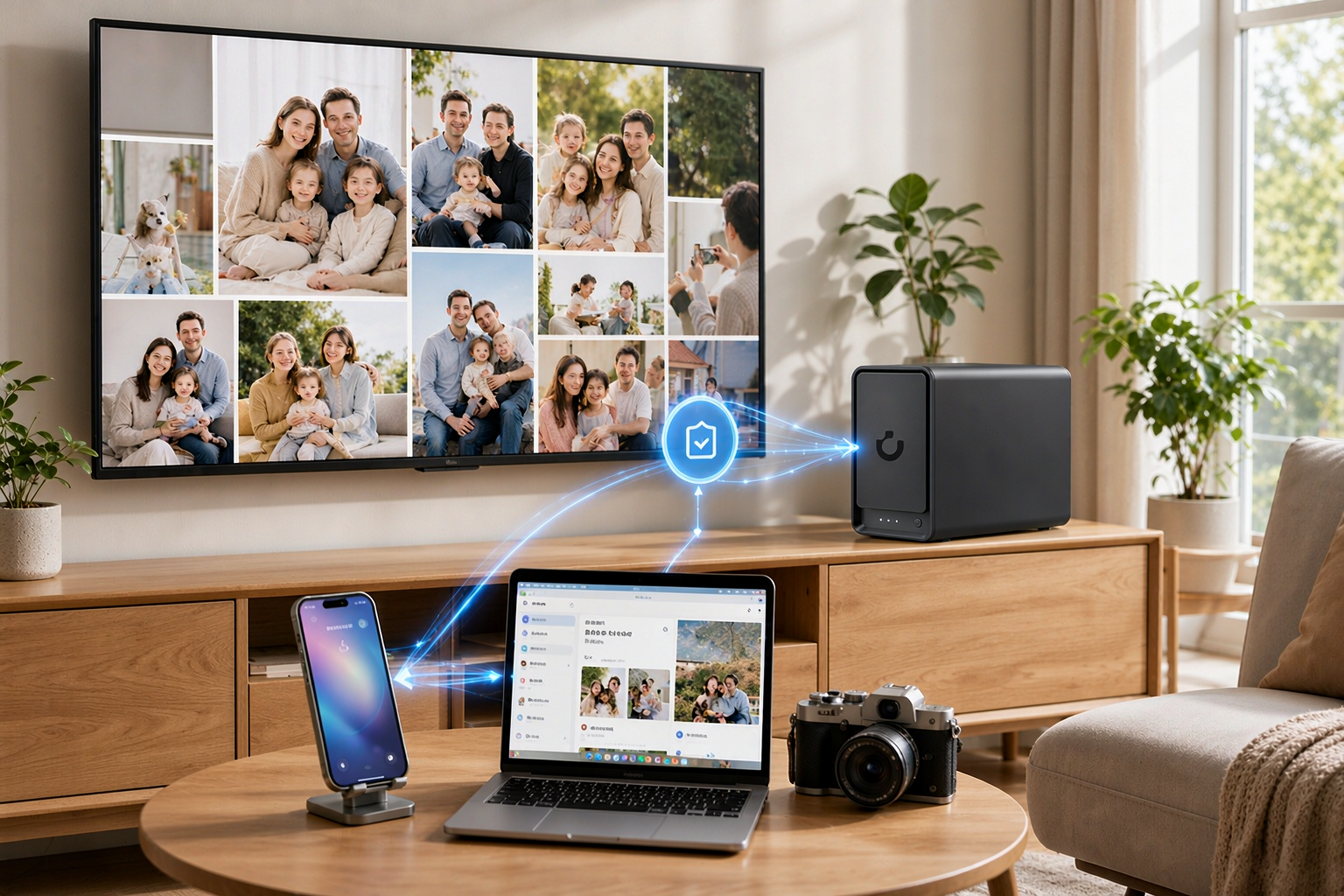
Regional distributors, direct-to-consumer brands, security companies and broadband providers most often launch a private label storage line in the United States, and the reason each one starts decides which platform fits.
Regional IT distributors use a house brand to protect margin. Reselling another company’s appliance means competing on price with every other reseller of the same unit, while an own-brand SKU turns the same shelf space into a defended product line.
DTC and e-commerce brands add storage hardware next to the accessories and devices they already sell. An entry two-bay unit sits at the bottom of the ladder, which is exactly how woCyber positions the A2 Pro: the entry price point of the NAS line-up.
Security and alarm brands sell detection plus local retention. The S1 fuses an edge AI network video recorder with a private cloud NAS in a single appliance, classifies people, vehicles and pets on the device with a false-alarm rate below 3%, and stores footage under 7, 14 or 30-day retention policies.
Broadband and smart-home service providers bundle storage with a connection. Broadband and ISP bundling programs appear on the A2 Pro product page as a target scenario, which is one reason the entry platform is the least expensive of the five to build in volume.
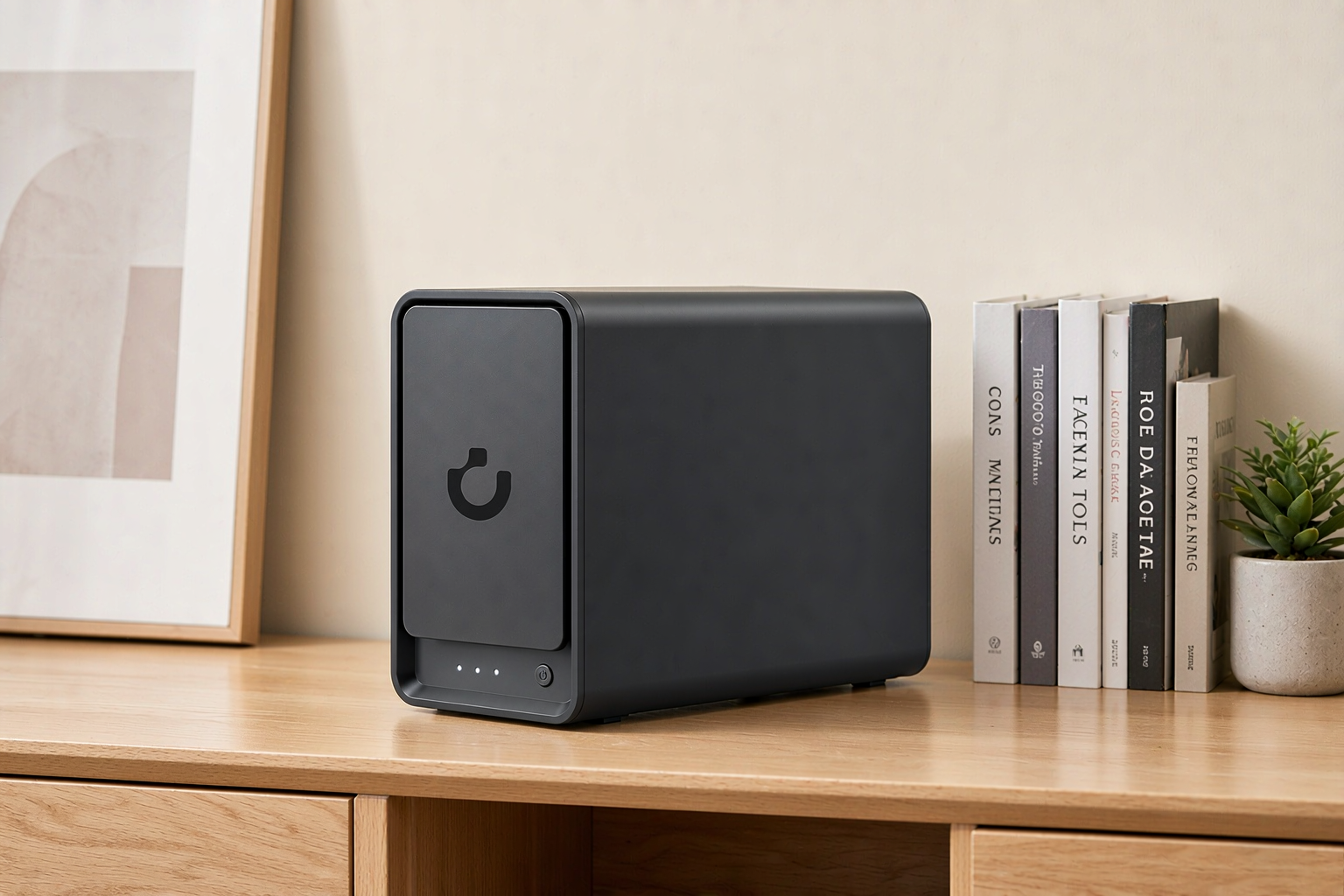
Ownership decides whether a private label brand is a real asset or a rented one. On woCyber programs the custom design, the tooling and the shipped brand identity belong to the buyer, while the base platform, the manufacturing process and the supply chain belong to the factory.
| Asset or right | What the buyer holds | What stays with the factory |
|---|---|---|
| Industrial design and tooling | Custom design and tooling are invoiced to the buyer, with ownership transferring on final payment | Standard platform tooling and enclosures already in production |
| Firmware release control | Own version numbering and update cadence, with a customer-specific branch maintained for the life of the program | The underlying Linux-based NAS operating system and its maintenance team |
| Mobile app and store listing | The white-label app is published under the buyer’s developer account | The client application source and the localization packs |
| Brand marks on the product | Hardware, packaging, app and manuals carry the buyer’s brand only | Nothing visible; manufacturer marks are not exposed in shipped clients |
| Territory | Regional exclusivity can be agreed in writing for committed annual volume | The right to supply other territories where no exclusivity is agreed |
| Certification documents | Test reports and declarations covering the configuration ordered | The test-house relationships and re-testing capacity |
| Spare parts and service | A three-year hardware warranty with spare-part supply for the life of the program | Repair process, root-cause analysis and corrective-action reporting |
Two entries in that table are worth negotiating rather than assuming: custom tooling is not reused for other clients once ownership transfers, and exclusivity is a contractual term tied to committed volume rather than a default.
Branding reaches as far as the buyer wants within the existing platform: logo application, boot animation, interface skin, app identity, documentation language and packaging artwork are all configurable without touching the certified base design. Logos are applied by silkscreen or laser engraving, a branded boot animation replaces the default one, and the mobile app, desktop client and web portal are white-labeled with the buyer’s identity, colors and languages.
Packaging is where branding meets regulation: retail cartons, structural inserts, multilingual manuals, EAN and UPC coding, WEEE marks and country-of-origin labeling all belong to the scope, because US marketplaces and European retail listings each demand their own label set.
Beyond identity, the platform itself can be reconfigured. The A2 Pro offers eMMC 16 GB or 32 GB, RAM variants, single-bay and two-bay variants and an optional gigabit uplink variant, while the X4 scope covers RAM up to 16 GB, eMMC up to 128 GB, 1GbE, 2.5GbE or 10GbE port mixes and an optional NVMe cache slot. Casing color and surface treatment are customizable per project.
FCC Part 15 is the entry requirement for electronic storage hardware marketed in the United States, and CE, UKCA, RoHS, REACH and WEEE documentation is required for the same SKU when it ships to Europe. woCyber lists CE, UKCA, FCC, RoHS, REACH and WEEE support across its platforms, with the FCC Part 15 position covered by test reports and the material regimes covered by declarations of conformity. The technical baseline for the US position is published in the Code of Federal Regulations, Title 47, Part 15. Camera integration adds a third item, the ONVIF interoperability profile, which keeps recorders and cameras from different vendors mixable.
How a platform was tested in the past is no substitute for documents covering the configuration on the purchase order, so ask for the report matching the exact SKU ordered.
A private label agreement is only as strong as its written clauses. Seven of them are worth settling before volume starts.
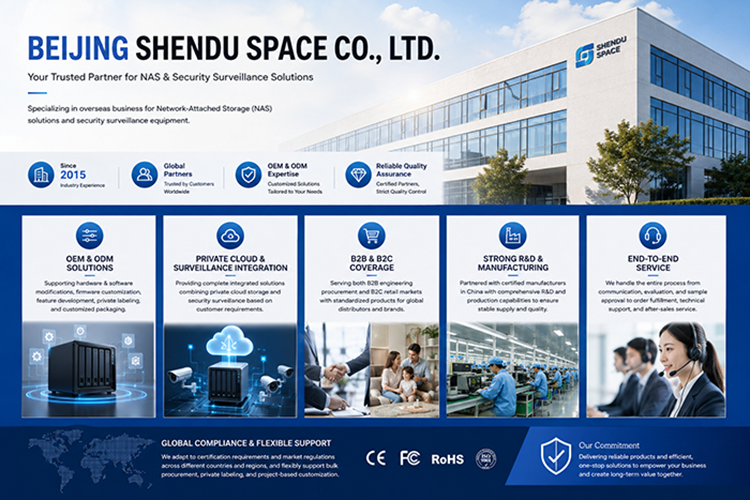
Two structural facts sit under that list. woCyber runs its headquarters and R&D center in Beijing and its mass production base in Shenzhen, so the organization that designs the board and the one that builds the order are the same company in two cities. And the platforms are local-storage appliances, so no mandatory cloud subscription sits between the hardware and the end user; whether a recurring service is sold on top is the brand’s commercial decision.
woCyber does not publish unit pricing or NRE figures; both are quoted per project against the configuration actually ordered. Four factors move the number. Enclosure tooling is the largest: reconfiguring an existing platform keeps the certified base design intact and avoids tooling cost altogether, while a new custom enclosure adds NRE. Hardware configuration is the second, since memory, eMMC size, bay count and port mix all carry component cost. Packaging tier, localization scope and certification scope follow, since each added market carries documents and testing.
Three published terms are worth planning around. Design and tooling NRE is credited against volume above an agreed threshold, enclosure tooling can be amortized into the unit price or invoiced separately with ownership transferring on final payment, and orders run on a 30% deposit with the balance against the bill of lading. The standard minimum is 100 units per SKU for reconfiguration, rising to 1,000 units where a new PCB respin or enclosure tooling is required, which lets a brand launch one model first and add others after sell-through data arrives.
For an entry unit the natural starting platform is the two-bay woCyber A2 Pro, which carries the value-tier position and can be reconfigured and branded inside the same program; mid-range programs that need four bays, hardware transcoding or link aggregation usually start from the X4. Program scope is published on the OEM/ODM services page, and the document status of each model is listed on the certifications page.
No. A private label or reconfiguration program uses an existing platform, so the buyer obtains an own-brand product without tooling or board design. New hardware development is the ODM route, and it is usually worth funding only when committed volume forecasts support the engineering and tooling investment.
woCyber quotes reconfiguration from 100 units per SKU, and from 1,000 units where a new PCB respin or enclosure tooling is involved. The threshold applies per SKU, so a brand can launch one model first and add further models after sell-through data arrives.
Yes. In a private label or OEM program the shipped hardware, packaging, mobile app and documentation carry the buyer’s brand only, and the white-label clients are submitted to the app stores under the buyer’s own developer account rather than the manufacturer’s.
The buyer does. Custom industrial design and tooling are invoiced to the buyer and ownership transfers on final payment, and customer-specific tooling is not reused for other clients.
CE, UKCA, FCC, RoHS, REACH and WEEE support is standard across the platforms. CE, UKCA and FCC cover market access, while RoHS, REACH and WEEE cover materials, substances and disposal. Ask for the test reports that match the exact configuration ordered.
From 100 units per model: white-label app, custom firmware, silkscreen or laser-engraved logo, market-specific documentation and packaging. Our export engineering team replies within one working day.
White Label NAS Program for Regional Distributors: SKU Ladder, Branding Rights and Launch Costs A white label NAS for regional distributors is…
October 1, 2026Retail NAS SKU for Big Box Channel Partners: How Retailers Specify a Storage Line A retail NAS SKU for big box channel…
September 30, 2026NAS Manufacturing USA: Sourcing Guide for 2026 Brands Most NAS manufacturing USA comparisons start with the assembly line. The invoice disagrees. On…
Ask our export team for the OEM/ODM cooperation guide and a written quotation.