Leo · 2026-09
Vetting NAS server manufacturers is an evidence exercise rather than a relationship exercise. The records that change the risk profile are incoming-material sampling against AQL levels, optical inspection on every board, a 72-hour burn-in run under load, outgoing inspection with a serial-number list attached to each shipment, and test reports held per model instead of per brand. A buyer who requests those five items before the first purchase order learns more than a showroom visit can show.

Storage hardware is easy to buy and hard to buy well. A brand, distributor or integrator in the United States can source a two-bay private-cloud appliance from dozens of suppliers, and most of them will return a quotation within two working days. What separates them is not the quotation sheet but the paper behind it: who owns the tooling, who signed the test report, and who can reconstruct what happened to unit 1,432 if it fails in the field.
This guide is written for the person who signs the purchase order. It covers what to request, how to validate a supplier without keeping an inspector in the factory, how much verification effort to budget, and what belongs in writing before the first deposit moves.
The lowest quotation only counts if the lot passes. A defective batch rarely fails at the factory; it fails at the customer, and the costs that follow — replacement units, reverse freight, technician time and the support conversation with the end user — land on the brand whose logo is printed on the enclosure. A supplier that screens material at incoming inspection and runs every unit through burn-in absorbs those failures before shipment, which changes the arithmetic even when the unit price is higher.
Consider a specific case. If you are a category manager at a 40-person regional distributor preparing a first private-label order of 300 two-bay units for a spring retail listing, your exposure is not the 300 units — it is the listing itself. A firmware image that will not boot on part of the batch means dozens of units of reverse logistics and a retailer asking whether the next shipment will arrive on time. Verification is what converts that risk into a document set you can read in an afternoon.
The first question is whether the supplier populates its own boards. A manufacturer runs the sequence from incoming material control through SMT and DIP assembly, sub-assembly, in-circuit and functional test, burn-in, outgoing inspection and packing — and can show each gate. The woCyber factory page, for instance, documents seven gated steps with automated optical inspection on every board and a 72-hour burn-in room under temperature control, and states that production scales from 500 to 20,000+ units per month with capacity booked at order confirmation.
An intermediary assembles from purchased modules and cannot produce those records. The test is simple: ask for the record, not the description. A manufacturer has an aging log, an AOI report and a shipment inspection report per batch. A trading operation has a photograph of someone else’s line. Most NAS server manufacturers will describe the process correctly, because the vocabulary is public; the discriminating question is which of the seven gates has a retrievable record behind it.
A second test is where engineering sits. Hardware, mechanical and firmware engineering working in the same building as the production floor means a design change reaches the line the same week and field feedback reaches the engineers directly, instead of traveling through a supplier chain. That proximity is what makes a mid-program change order survivable.
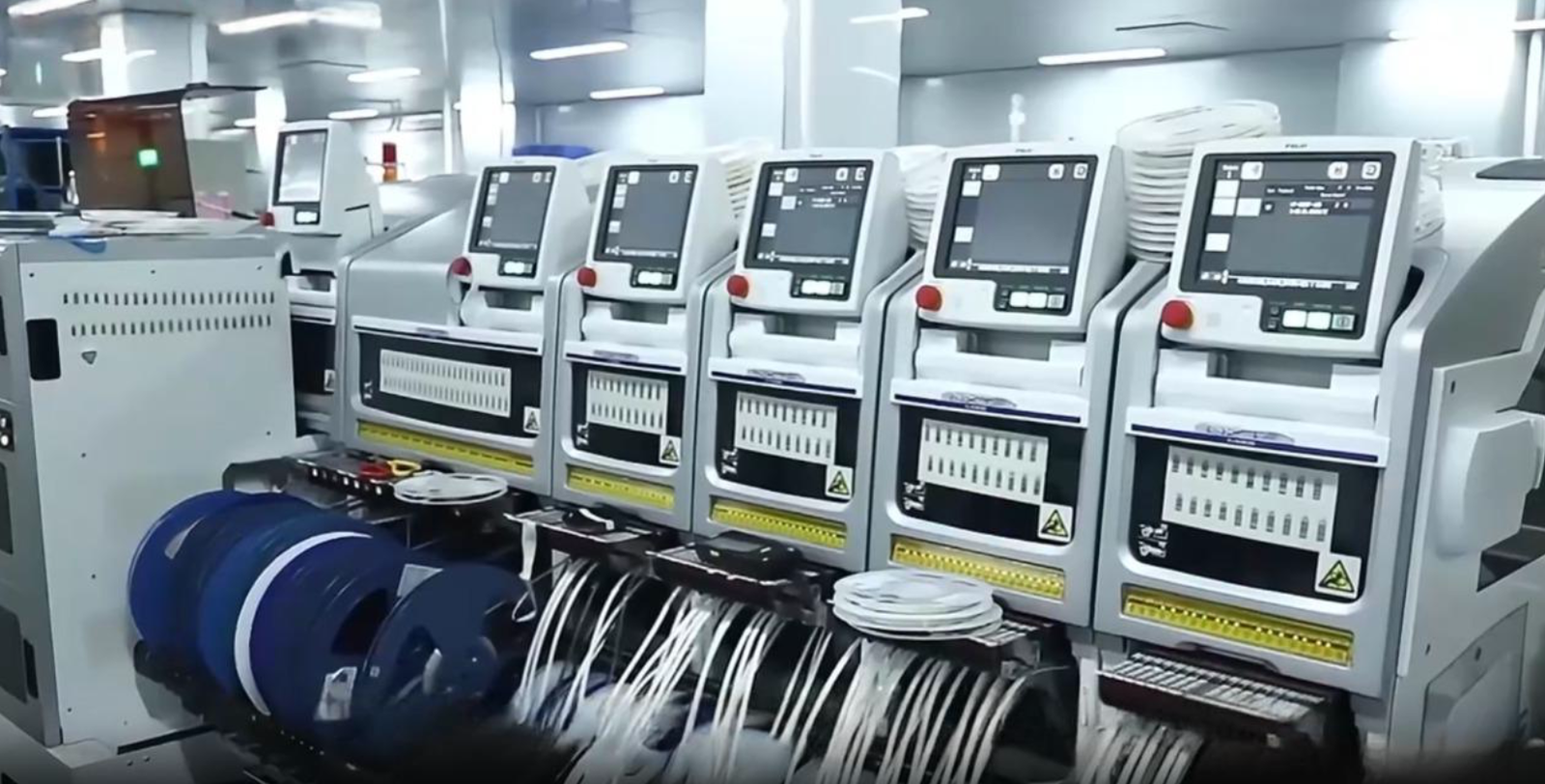
Five document sets cover most of the risk. Ask for them in writing during quotation, not after the deposit; how quickly a supplier produces them is itself part of the answer.
| Record to request | What it should contain | What it establishes |
|---|---|---|
| Incoming material control | Component-level sampling to AQL 1.0 / 2.5 against golden samples, with rejected lots quarantined and returned | Material is screened at the door rather than trusted |
| Board-level inspection | Automated optical inspection on every board after reflow, plus in-circuit and functional test on 100 percent of units | Boards are tested, not merely assembled |
| Burn-in log | 72 hours of continuous high-load read/write in a temperature-controlled aging room with power, thermal and I/O logging | Weak units fail at the supplier instead of at your customer |
| Outgoing shipment report | Function, appearance, accessory, labeling and packaging inspection with serial-number capture, archived per batch | A shipment can be reconciled unit by unit after arrival |
| Certification pack | Per-model test reports and declarations of conformity for the destination markets, not a brand-level badge | Compliance claims are tied to the configuration that was tested |
| Program terms sheet | MOQ, sample and mass-production lead times, payment split, NRE credit and tooling ownership in one document | Commercial risk is allocated before tooling is cut |
None of these records is confidential by nature, and none of them identifies another client. A supplier that treats routine quality documentation as a trade secret is answering the question you asked.
Import documentation sits on the buyer’s side of the line, because the brand is normally the importer of record. The U.S. Customs and Border Protection import guide covers the entry process and the forms involved, and the International Trade Administration publishes market-entry requirements by sector. Ask which of those documents the supplier prepares and which ones you prepare, and settle it before the first booking.
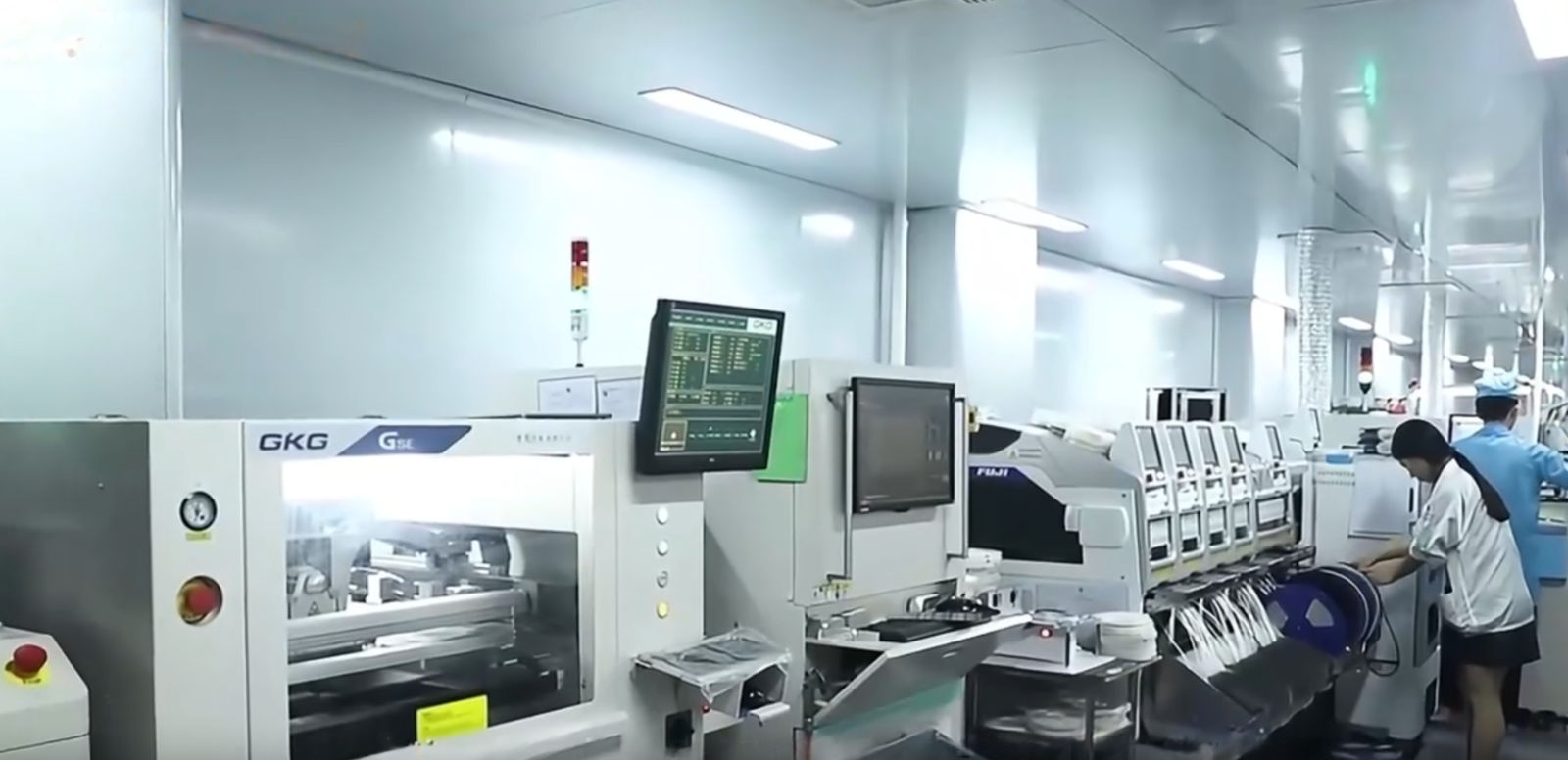
A site visit helps, but it is not required. Buyers in the United States evaluating NAS server manufacturers often cannot justify sending an engineer overseas for a first order, and they do not have to. Request a live video walkthrough of the line rather than an edited tour video, and schedule an independent inspection through an agency such as SGS, Bureau Veritas or TÜV, or appoint your own inspector in the region. Hosting third-party inspections and on-site visits is standard practice in contract manufacturing, and asking for it in the first email costs nothing.
Then test what arrives. A sample that boots is not a validated sample. Functional acceptance at the factory covers LAN negotiation, USB and HDMI enumeration, drive-bay detection, button and LED function and firmware boot verification; your own acceptance test can repeat those checks on receipt, add a hot-swap cycle, and restore a scheduled backup from the device.
Keep a signed golden sample. Cosmetic and material standards drift slowly, and a reference unit held by both parties turns a subjective argument about finish or fit into a physical comparison. Component-level incoming inspection is normally run against exactly that reference, which is why the golden sample should be signed at design freeze rather than after the first shipment.
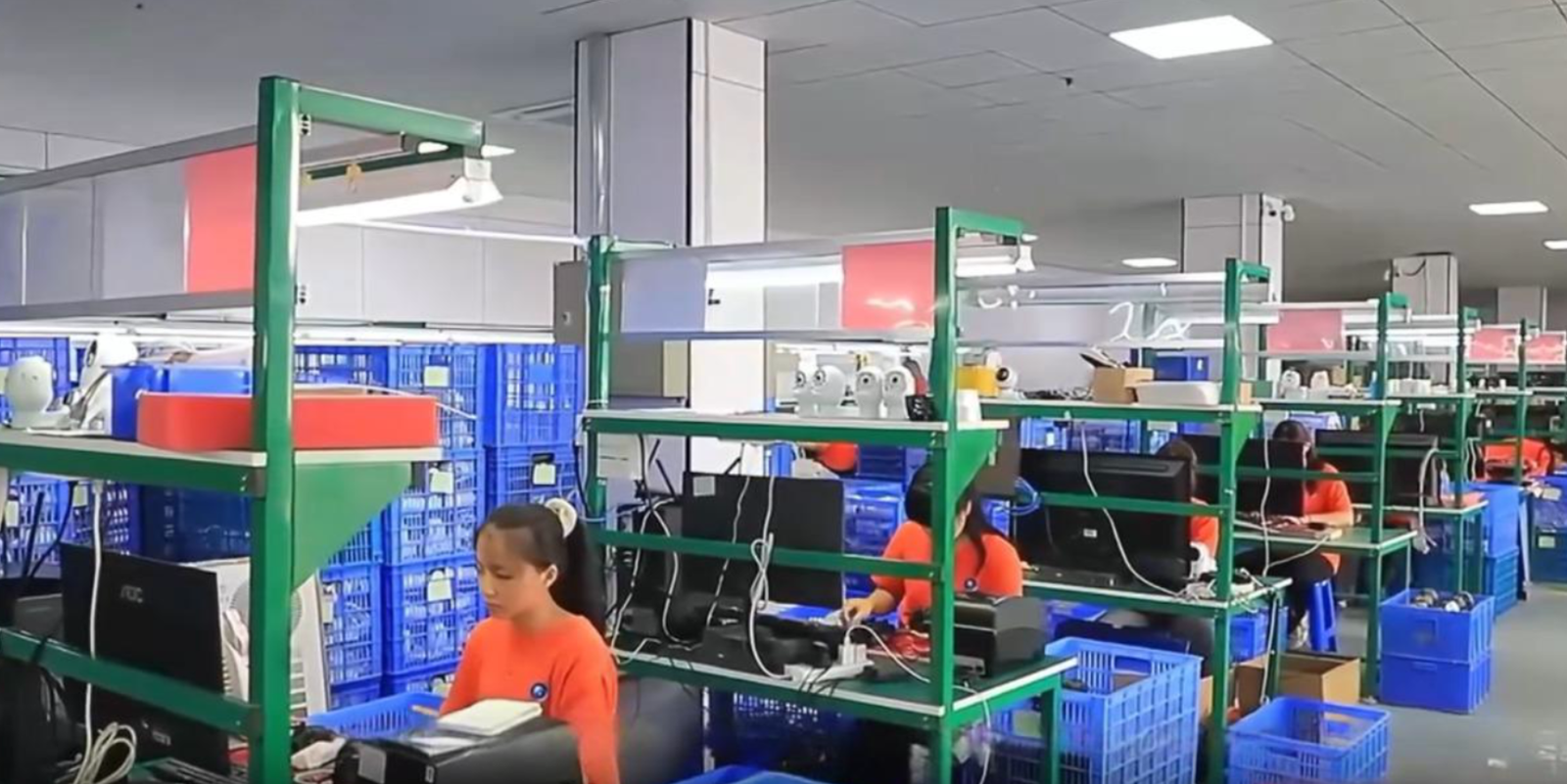
Verification has a cost, and it is small next to the cost of an escape. Buyers who compare NAS server manufacturers on price alone usually discover the difference later, in the returns process. Two calculations are enough to size the effort up front.
Sampling effort: units sampled = shipment size × sampling rate, and hours = units sampled × minutes per unit ÷ 60. A buyer taking four shipments of 2,500 units a year at a 1 percent incoming sample inspects 25 units per shipment, or 100 units a year. At 20 minutes per unit that is 2,000 minutes — roughly 33 hours, about four working days of quality time per year, spent before units reach customers rather than after.
Cash exposure: with a 30 percent deposit and the balance against the bill of lading, the up-front payment is 0.3 × units × unit cost. A 600-unit reconfiguration order commits 180 unit-costs before shipment; a 1,000-unit minimum for a new PCB respin commits 300. The formula carries more weight than the price, because it shows how much capital the program consumes before it produces revenue.
Verification decides whether you proceed; the agreement decides what happens when something changes. The terms worth locking down are MOQ — 100 units per SKU when an existing platform is reconfigured, 1,000 units where a new PCB respin or enclosure tooling is required; lead time — samples 7–10 working days after design freeze and mass production 15–30 days from order confirmation, depending on volume and configuration; payment — 30 percent deposit with the order and 70 percent against the bill of lading; NRE — quoted per project and credited against volume above an agreed threshold; tooling — ownership transferring to the buyer on final payment, with customer-specific tooling not reused for other clients; warranty — three years on hardware with spare-part supply for the life of the program; and RMA terms, including root-cause analysis and a corrective-action report when a field failure rate exceeds the agreed threshold.
Two clauses are worth requesting even though they are not automatic: an NDA countersigned before technical requirements are shared, and regional exclusivity tied to committed annual volume. Both appear regularly in export manufacturing programs, and both belong in the distribution agreement rather than in an email thread.
Where a program builds on an existing platform instead of a new design, reconfiguration is the faster route because the certified base design is preserved — which protects the EMC and safety test position. A mid-range example is the X4 four-bay enterprise NAS server, with Intel N100, dual 2.5GbE ports supporting link aggregation up to 5 Gbps, RAID 0/1/5/6/10 and up to 120 TB raw, the configuration woCyber recommends for departmental file servers and surveillance recording back ends. The platform line-up runs from one bay to four, so a distributor can build a price ladder from a single supplier relationship, and the OEM / ODM services page sets out what each customization service delivers and when.
Some answers should stop a program before a deposit is paid, whatever the price difference is.
Ask for process records rather than a process description: incoming sampling results against AQL 1.0 / 2.5, optical inspection reports, a 72-hour burn-in log taken under load, and a shipment inspection report carrying serial numbers. A manufacturer will have these on file; an intermediary has to obtain them from somebody else.
MOQ is 100 units per SKU when an existing platform is reconfigured, and 1,000 units where a new PCB respin or enclosure tooling is required. Samples follow 7–10 working days after design freeze, and mass production runs 15–30 days from order confirmation depending on volume and configuration.
Custom design and tooling are invoiced to the buyer, and ownership transfers on final payment. Customer-specific tooling is not reused for other clients. Confirm both points in the agreement itself rather than in a chat thread, because tooling ownership is the clause buyers most often assume.
Yes, and requesting it is normal. Live video walkthroughs, scheduled inspections by agencies such as SGS, Bureau Veritas or TÜV, and visits by your own engineers can all be arranged on request. A supplier that resists independent inspection is telling you something about its records.
FCC Part 15 for the United States, plus CE and UKCA if the same SKU ships to Europe, and RoHS 3, REACH and WEEE documentation for the European market. Certificates are issued per model and per firmware build, so a change to ports, wireless module or power supply requires reassessment against the destination market standards.
X4 delivers Intel N100 performance, dual 2.5GbE with link aggregation up to 5 Gbps, RAID 0/1/5/6/10 and up to 120 TB — built for integrators and commercial deployments.
White Label NAS Program for Regional Distributors: SKU Ladder, Branding Rights and Launch Costs A white label NAS for regional distributors is…
October 1, 2026Retail NAS SKU for Big Box Channel Partners: How Retailers Specify a Storage Line A retail NAS SKU for big box channel…
September 30, 2026NAS Manufacturing USA: Sourcing Guide for 2026 Brands Most NAS manufacturing USA comparisons start with the assembly line. The invoice disagrees. On…
Ask our export team for the OEM/ODM cooperation guide and a written quotation.