Leo · 2026-09
Most NAS manufacturing USA comparisons start with the assembly line. The invoice disagrees. On a first order, the customs classification and the documentation package move the landed number further than the location of the building does, and neither of those shows up in a comparison that stops at unit price. This guide works through the order in which the lines actually move — duty first, authorization second, assembly address third — and what has to be settled in writing before a purchase order is raised.
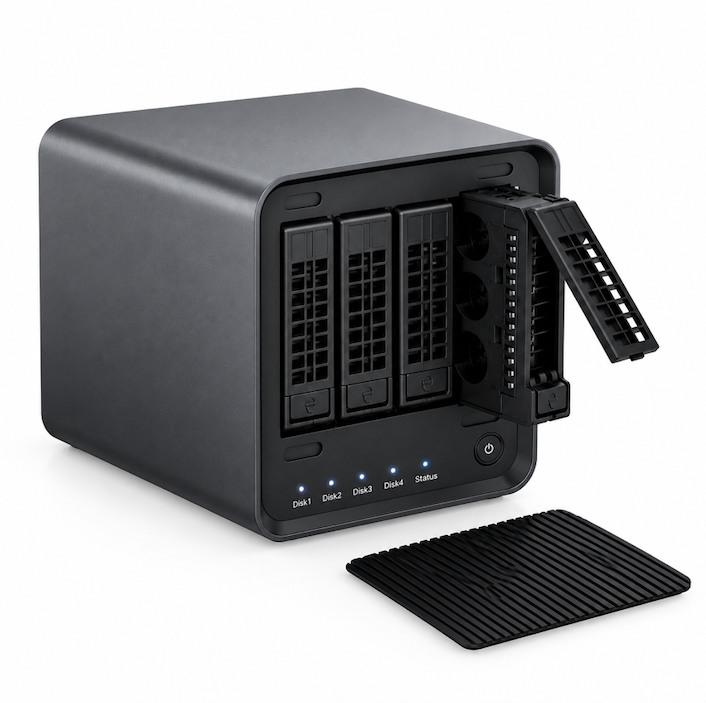
Two shipments of the same appliance can land at different costs depending only on how the goods are classified and what country of origin is declared. A finished storage appliance entering the United States is valued at its transaction value and assessed at the rate attached to its HTS classification. The same appliance shipped as components and assembled domestically attracts duty on those components instead. Neither route is automatically cheaper; what matters is which value the rate is applied to, and whether the documentation supports the declaration.
This is the step that most NAS manufacturing USA decisions skip. Ask a customs broker to classify the finished configuration and the component configuration separately, then apply both rates to the same order quantity. Until that is done no quotation is comparable, because one reply may assume a landed price while the next assumes an FOB price — and the gap between them is the duty line. The CBP import process sets out what a broker needs to make that classification call in the first place.
Radio-frequency devices sold in the United States need equipment authorization on the merits of the device itself, and the authorization follows the transmitter and the design rather than the assembly address. The applicable rules are published in 47 CFR Part 15, and they apply to the finished product whichever country performed the final assembly.
What changes is the evidence trail. An onshore assembler can have testing witnessed directly; an overseas partner has to supply test reports that match the exact configuration on the purchase order. Either way, the buyer should hold CE, UKCA, FCC, RoHS, REACH and WEEE documents, an ISO 9001 certificate for the quality system, and an ONVIF conformance statement where cameras are in scope — matched to the memory, network and drive options actually ordered, not to a sibling model.
| Cost line | Onshore final assembly | Overseas OEM partner |
|---|---|---|
| Chassis unit price | Higher per unit — smaller batch quantities and higher domestic labor rates | Lower — the platform is already running in volume |
| Tooling and engineering (NRE) | Charged by the assembler even when the tooling already exists | Quoted per project, and creditable against agreed volume |
| Inbound freight and duty | Reduced or removed on finished goods | Duty assessed on customs value at the applicable HTS rate |
| Engineering oversight | Site visits are cheaper, but a second process is still a second process | Travel and remote audit budget required |
| Certification and marking | Unchanged — required either way | Unchanged — required either way |
| Platform capability | Unchanged by location | Unchanged by location |
The last row is the one buyers forget. A 4-bay platform does not gain bays or network throughput because it was assembled nearer to the buyer, so a NAS manufacturing USA decision built on capability is being argued in the wrong column. In practice the technical comparison across a shortlist is the shorter half of the work, and the commercial comparison is the longer half. Our guide to how US brands vet NAS server manufacturers covers that longer half.
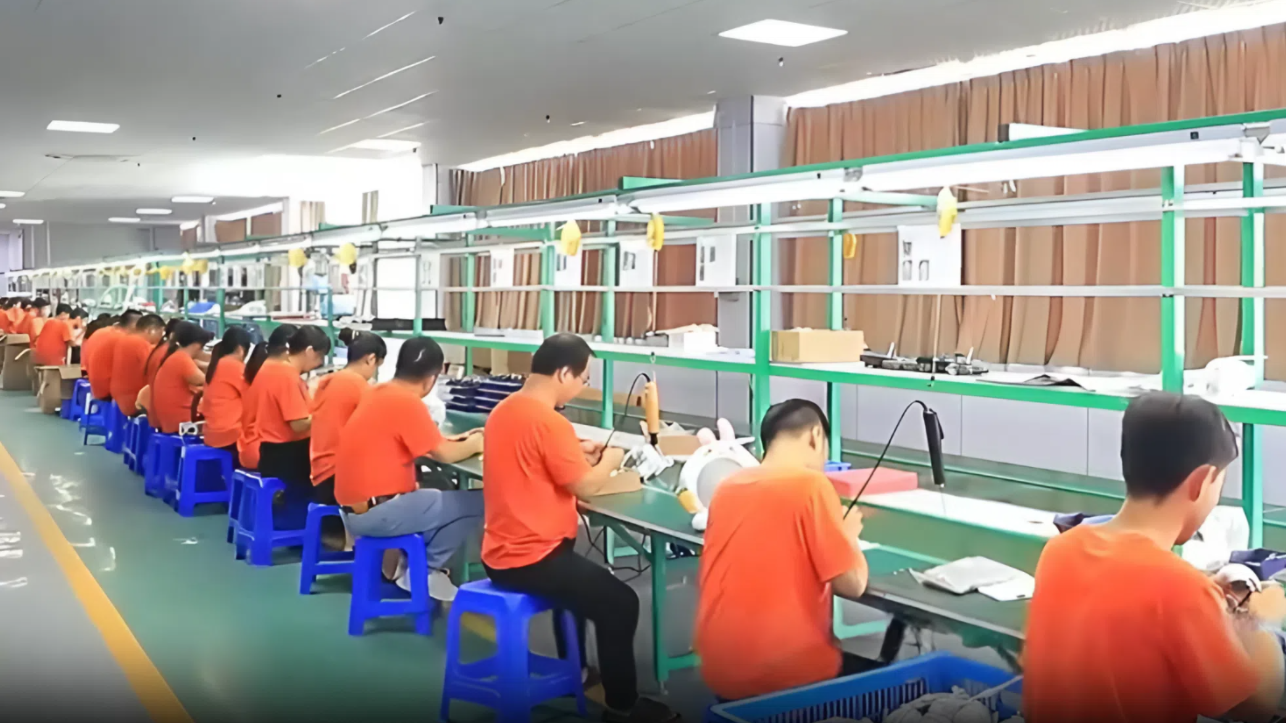
Documentation, packaging and the app build travel easily. Tooling ownership and the right to reuse a customer-specific mold do not travel unless they are written down.
A white-label app published under your brand, a brand UI and boot animation, a logo applied by silkscreen or laser engraving, market-specific documentation and packaging, and regional power adapter variants are standard OEM/ODM scope — the full list sits on the OEM/ODM program page. woCyber applies the same ownership map to every program: tooling can be amortized into the unit price or invoiced separately, ownership transfers to the buyer once it is paid for, and customer-specific tooling is not reused for another account. Agreements that stay silent on that last point are the ones that cause trouble two years later. The buyer-ownership split is set out in more detail in our breakdown of a NAS private label program for US brands.
Start from the landed-cost formula rather than the unit price, because the unit price is usually the only line a first quote contains.
Landed cost per unit = (goods value + inbound freight + duty + brokerage and entry) ÷ units
Take the X4 platform at its published single-unit reference price of $400 — a list figure for one unit, excluding shipping and tariffs, with volume and OEM pricing quoted on request. That is the only input in the calculation that comes from a published source. Freight, brokerage and the duty rate are placeholders in the formula, to be replaced with your own quoted freight and your broker’s confirmed classification rate before the arithmetic means anything.
Worked through with placeholder inputs for a 100-unit order: goods value 400 × 100 = $40,000; freight at a placeholder $9 per unit = $900; brokerage and entry at a placeholder $350; duty at a placeholder 10% rate = $4,000. Total = $45,250, or $452.50 per unit. Run the same order at 500 units on the same placeholders: goods value $200,000, freight $4,500, duty $20,000, brokerage $600 — $225,100, or $450.20 per unit. The duty rate is the one input that has to be confirmed in writing by a customs broker for your HTS classification; a single arbitrary rate is used above only to show how the formula behaves.
Read those two figures together and the pattern is clear. Duty does not fall with volume, because it is a percentage of value; what falls is the fixed handling component, and only slightly. That is why the third profile behaves differently. At 1,000 units — the threshold where a new PCB respin or new enclosure tooling becomes necessary — the order stops being a freight exercise and becomes an engineering recovery exercise, with NRE quoted per project and credited against agreed volume.
This is the arithmetic a channel launch actually turns on. Consider a brand going to market through regional broadband and smart-home service providers rather than through retail: a 100-unit first order per SKU, one hero model, and a bundle that has to carry the provider’s brand on the app, the boot animation and the carton. The trade-off is explicit — an onshore assembler puts a higher unit price on a process the brand can walk to, while an overseas OEM program puts a lower unit price behind a 100-unit minimum and a production line the brand does not own. What settles it is rarely the price gap; it is who integrates the branding. If the white-label app is published under the provider’s name in both app stores and the documentation is market-specific, the brand does not need an app team. On an onshore quote, that same work is typically a change order with its own engineering budget and a second approval loop.
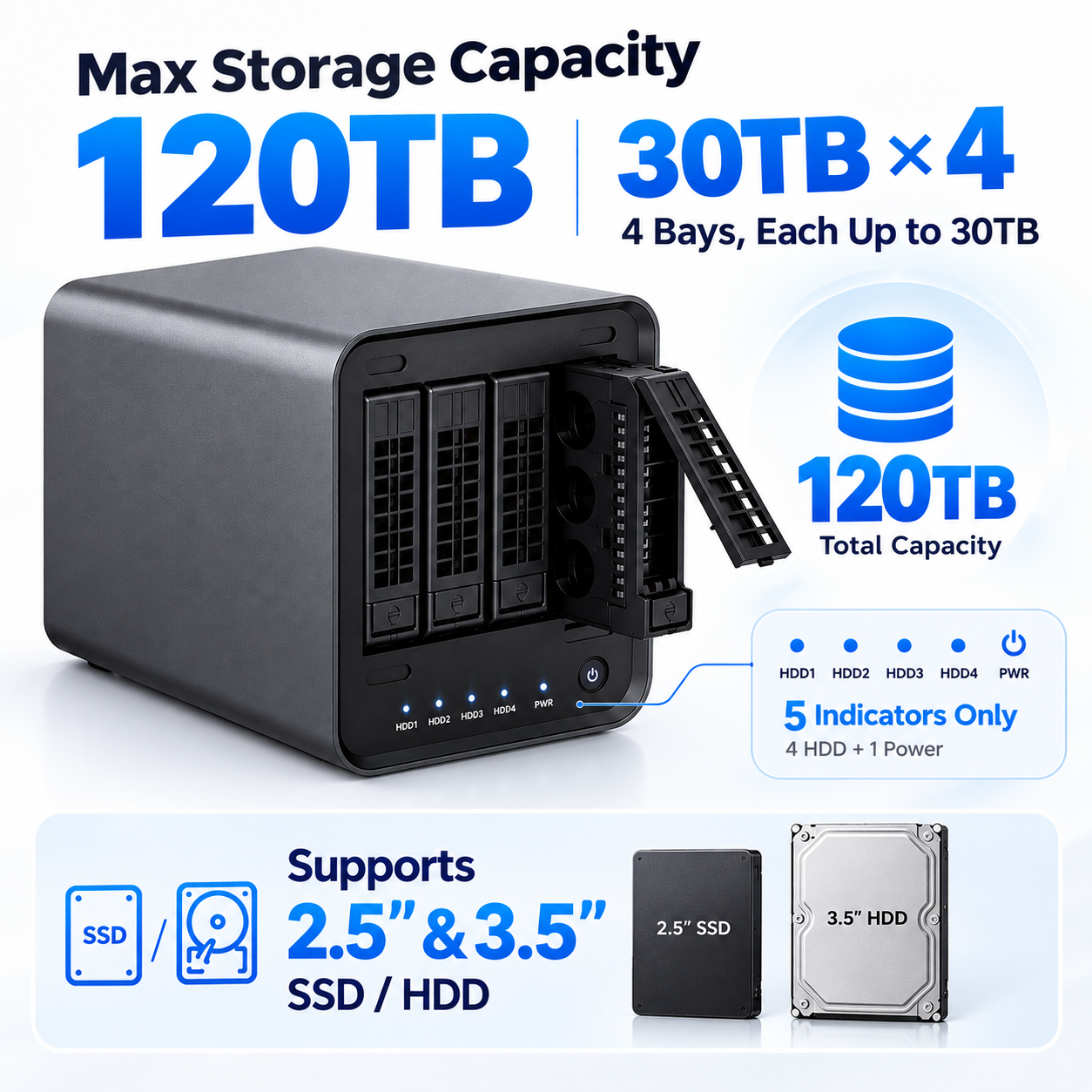
For that configuration the published platform is the 2-bay A2 Pro — RK3568 with a 1 TOPS NPU, 48 TB, RAID 1, ONVIF and PoE camera support, and Bluetooth pairing — which woCyber lists for broadband and smart home service bundles. It carries a published single-unit reference price of $170, so a reconfiguration order at the 100-unit minimum is a commitment that sits inside an operating budget rather than a capital request; volume and OEM pricing are quoted on request. Where the pilot instead has to validate an enterprise deployment, the 4-bay X4 is the configuration most OEM programs build a first article on: Intel N100, dual 2.5GbE with link aggregation up to 5 Gbps, RAID 0/1/5/6/10, up to 120 TB. Samples are charged at the published unit price and credited in full against the first mass-production order. Our B2B NAS supplier RFQ guide covers how to write the request so two replies can be compared line by line.
These are the clauses that make a NAS manufacturing USA program auditable a year after the first shipment, rather than a set of assumptions that only surface when something goes wrong.
No. Duty is assessed on the customs value of whatever crosses the border. If components are imported and assembled domestically, duty applies to those components; if finished units are imported, duty applies to the finished unit. The classification and the country of origin set the rate, not the address of the assembly line.
Reconfiguration orders on an existing platform start at 100 units per SKU. A project that requires a new PCB respin or new enclosure tooling starts at 1,000 units, because the tooling cost has to be spread across a larger build.
Samples are charged at the published single-unit reference price. The fee is credited in full against the first mass-production order, so the sample line returns to zero once the program converts to volume.
CE, UKCA, FCC, RoHS, REACH and WEEE files for market access and materials, an ISO 9001 certificate for the quality system, ONVIF conformance where cameras are in scope, and 72-hour burn-in plus 100% outgoing inspection records archived by batch.
Yes, and this is where the two routes are most comparable. White-label app, brand UI and boot animation, logo by silkscreen or laser engraving, market-specific documentation and packaging, and regional power adapter variants all sit inside OEM/ODM scope either way — which means a NAS manufacturing USA program can carry the buyer’s brand without the buyer owning an app team. The difference is who integrates those changes, and at what engineering cost.
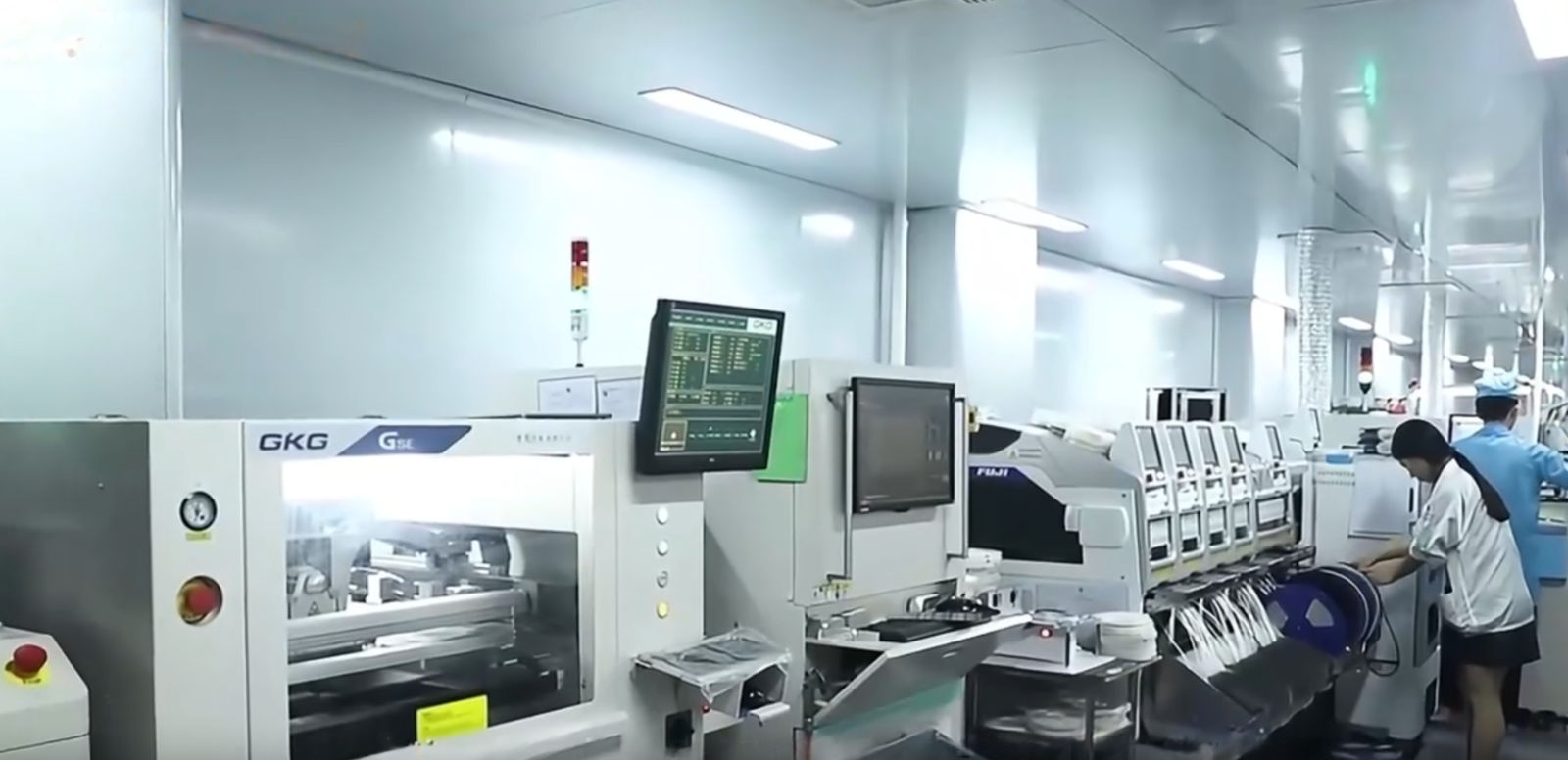
We are the factory: SMT to shipment under one roof, R&D in Beijing, mass production in Shenzhen. Factory-direct pricing without trading-company markups.
White Label NAS Program for Regional Distributors: SKU Ladder, Branding Rights and Launch Costs A white label NAS for regional distributors is…
October 1, 2026Retail NAS SKU for Big Box Channel Partners: How Retailers Specify a Storage Line A retail NAS SKU for big box channel…
September 30, 2026NAS Manufacturer for Enterprise: 2026 Selection Checklist A procurement team that picks the storage platform and the storage supplier in the same…
Ask our export team for the OEM/ODM cooperation guide and a written quotation.