Leo · 2026-09
OEM NAS manufacturing is the practice of having an established hardware manufacturer design, certify and produce network-attached storage appliances that a buyer sells under its own brand. woCyber, the export brand of a Beijing-based storage hardware manufacturer with 15 years of B2B experience, runs NAS OEM programs starting from 100 units per order.
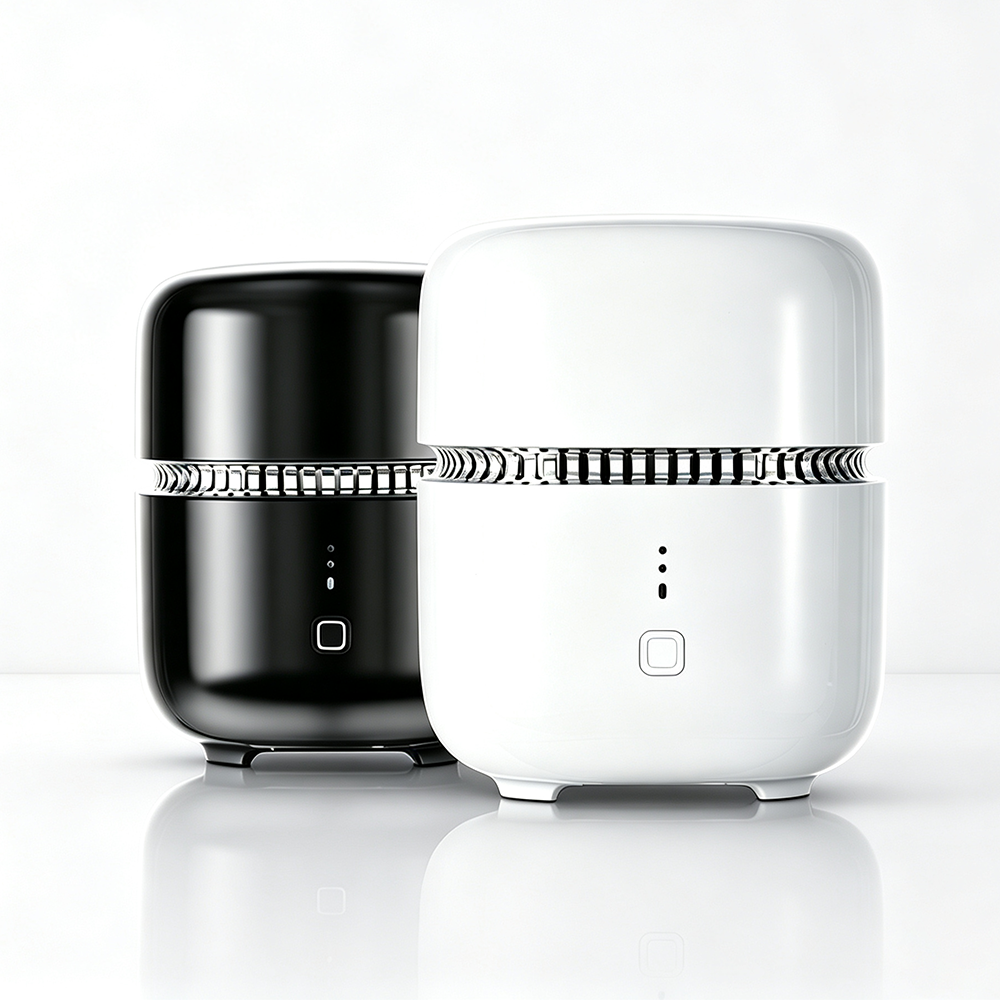
Most buyers who ask what is OEM NAS manufacturing are comparing it with three alternatives: building hardware in-house, buying finished units and reselling them, or drop-shipping someone else’s brand. This guide explains how the OEM model works step by step, what can realistically be customised, how it differs from ODM and white label, and how to evaluate a manufacturer before committing volume.
What is OEM NAS manufacturing in practical terms? It is a division of labour. The manufacturer contributes the hardware platform, the storage operating system, the AI feature set, certification documentation and mass-production capacity. The buyer contributes brand identity, market access, channel relationships and after-sales presence in its region. The finished appliance carries the buyer’s logo, name, firmware skin and packaging — while the engineering and production risk stays with the factory that builds storage hardware for a living.
The model exists because a competitive NAS product stacks four engineering layers: hardware design (SoC selection, PCB, thermals, chassis tooling), a storage OS (RAID management, multi-user accounts, remote access, mobile and desktop clients), intelligent features such as on-device AI photo organization, and export compliance documentation including CE, UKCA, FCC, RoHS, REACH and WEEE. Building all four layers in-house can consume years and significant budget before the first unit ships. OEM manufacturing lets a brand buy that stack in one agreement and focus on selling it.
woCyber operates as an OEM / ODM only business — it does not run a consumer retail brand, so it does not compete with the distributors and security brands it manufactures for. Engineering is led by a founder who graduated from the Computer Science department of Peking University, and the manufacturing organization has 15 years of B2B storage hardware experience.
A typical OEM NAS program moves through six stages. The exact sequence varies by manufacturer, but serious buyers should expect all six to be documented before any deposit changes hands.
Two details separate professional programs from opportunistic ones. First, the options matrix should be published or available on request — not invented per negotiation. Second, firmware ownership terms must be explicit: the branded UI, boot animation, app-store identity and OTA channel should all carry the buyer’s brand for as long as the product is on sale.
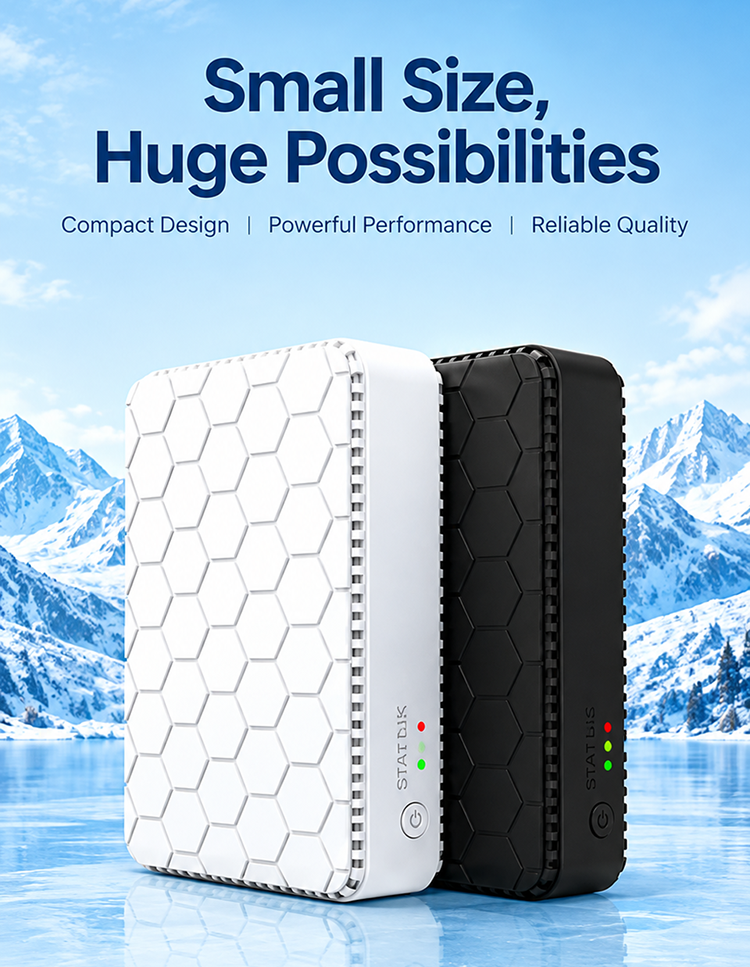
The three models are often confused, and the difference matters for cost, speed and product distinctiveness.
| Aspect | White label | OEM | ODM |
|---|---|---|---|
| Product base | Finished stock unit, rebranded | Existing platform, configured for the buyer | New design to the buyer’s specification |
| Customization depth | Logo and packaging only | Housing color, hardware variants, firmware feature set, apps, packaging | Full hardware and firmware development |
| Time to market | Fastest | Moderate — samples after configuration lock | Longest — new engineering cycle |
| Engineering cost | Minimal | Moderate, mostly NRE for tooling and firmware | Highest |
| Product distinctiveness | Low — competitors can buy the same unit | High — feature tiers and variants are buyer-specific | Highest |
| Best for | Testing demand quickly | Building a durable branded SKU ladder | Brands with unique requirements and volume |
woCyber supports both OEM and ODM paths on the same platform base, which suits brands that want to launch on a proven model first and diverge into custom variants once volume justifies the engineering cost.
Customization scope is the clearest way to judge an OEM NAS manufacturer. A capable partner structures it as a published matrix, not a verbal promise. woCyber documents six service areas: product design, hardware customization, firmware development, APP customization, packaging customization and mass production.
On the A2 Pro 2-bay compact NAS platform, the published OEM options matrix shows what that means in practice: two standard color ways with custom housing color and finish handled per project; logo silkscreen and branded product naming; eMMC 16 GB or 32 GB boot-storage variants; single-bay and 2-bay hardware variants; branded firmware UI with custom boot animation and feature-set selection for market tiering; a white-label mobile app publishable under the buyer’s name; and retail or premium packaging with localised documentation.
Surveillance brands get a different matrix on the S1 AiNAS Security Kit: kit composition with PoE or wireless cameras, bay count and storage tiers, brandable NVR UI, custom AI event rules and retention-policy defaults — covering the 7, 14 or 30-day retention configurations — plus a white-label mobile app and branded web portal.
Firmware tiering deserves emphasis. One hardware platform can ship as a basic backup appliance in a price-sensitive market and as a fuller private-cloud product in a premium market, purely through feature-set selection at the firmware stage. A single OEM agreement can therefore support several retail price points without new tooling.
Six checks, each verifiable during the first quotation exchange:
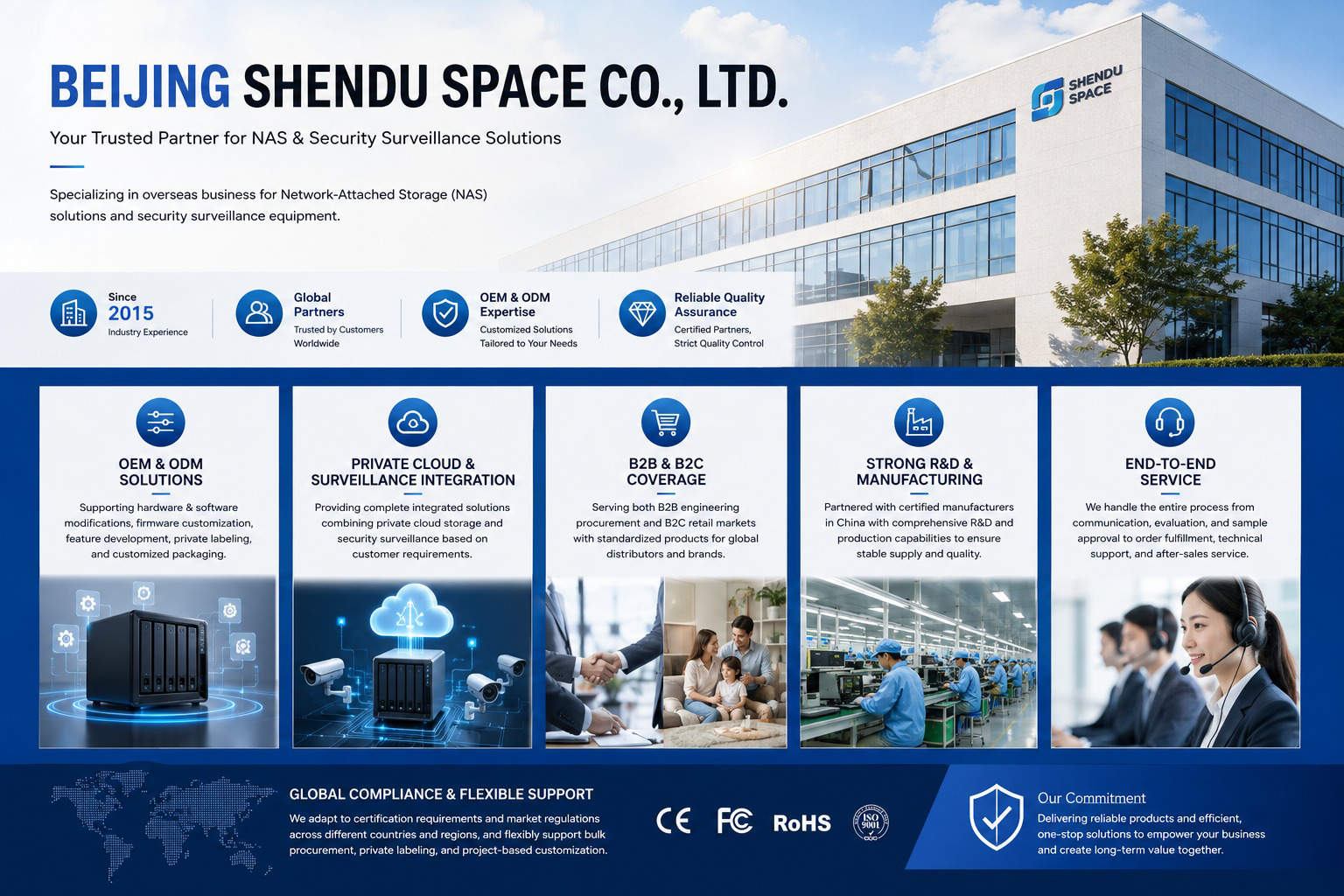
Neither question has a universal number, and a manufacturer that quotes one instantly is guessing. Unit cost is driven by five factors: the base platform (bay count, SoC class, memory), customization depth (tooling for a custom chassis costs more than a color change), certification scope, order volume, and firmware feature set. Program lead time depends on the same variables — a stock platform with standard coloring and firmware moves faster than a custom housing with new tooling. woCyber does not publish fixed lead times; each project receives a schedule with its quotation, which is the honest way to handle it.
What buyers can fix in advance is the entry threshold. MOQ from 100 units means a first SKU can be tested against a real market without committing warehouse quantities. From there, volume tiers are negotiated per project rather than locked into a rate card that ignores configuration differences.
China’s supply chain compresses the distance between SoC, PCB, enclosure and final assembly into one industrial region, which shortens iteration loops and reduces logistics overhead. A Beijing-based manufacturer such as woCyber adds engineering depth to that advantage: a founder from Peking University’s Computer Science department leading the platform work, and 15 years of B2B storage hardware production behind the export brand.
The legitimate concerns are quality consistency and communication. Both are addressed the same way: verify before volume. Request engineering samples with your branding, confirm that AI features run on-device rather than depending on the factory’s cloud, and confirm certification documentation for your specific markets. A manufacturer confident in its process makes all three easy — that responsiveness during quotation is itself the strongest quality signal you will get before the first shipment.
White label puts a logo on a finished stock unit. OEM NAS manufacturing configures an existing platform for the buyer — housing color, hardware variants, firmware feature set, branded apps and packaging — so the product is genuinely distinct while the engineering risk stays with the manufacturer. ODM goes one step further and develops new hardware to the buyer’s specification.
At woCyber, OEM programs start from 100 units per order. That threshold applies across the NAS platform programs and keeps the entry barrier low for regional distributors and security brands testing a first SKU. Volume tiers and configuration are settled in the proposal that accompanies the datasheet.
It depends on customization depth. A stock platform with standard housing and firmware moves fastest; a custom chassis with new tooling adds engineering-sample and certification time. woCyber does not publish fixed lead times — each project receives a schedule with its quotation, so timelines reflect the actual configuration rather than a marketing number.
Yes. The OEM options matrix covers branded firmware UI, custom boot animation, feature-set selection, and a white-label mobile app that can be published under the buyer’s name in the app stores, plus branded web portal and OTA channels on surveillance platforms such as the S1.
For export products, CE, UKCA, FCC, RoHS, REACH and WEEE form the baseline. Security and privacy-focused programs additionally benefit from GDPR-oriented data-locality documentation — see GDPR requirements for what European customers expect. Camera-based products should follow the ONVIF standard for interoperability.
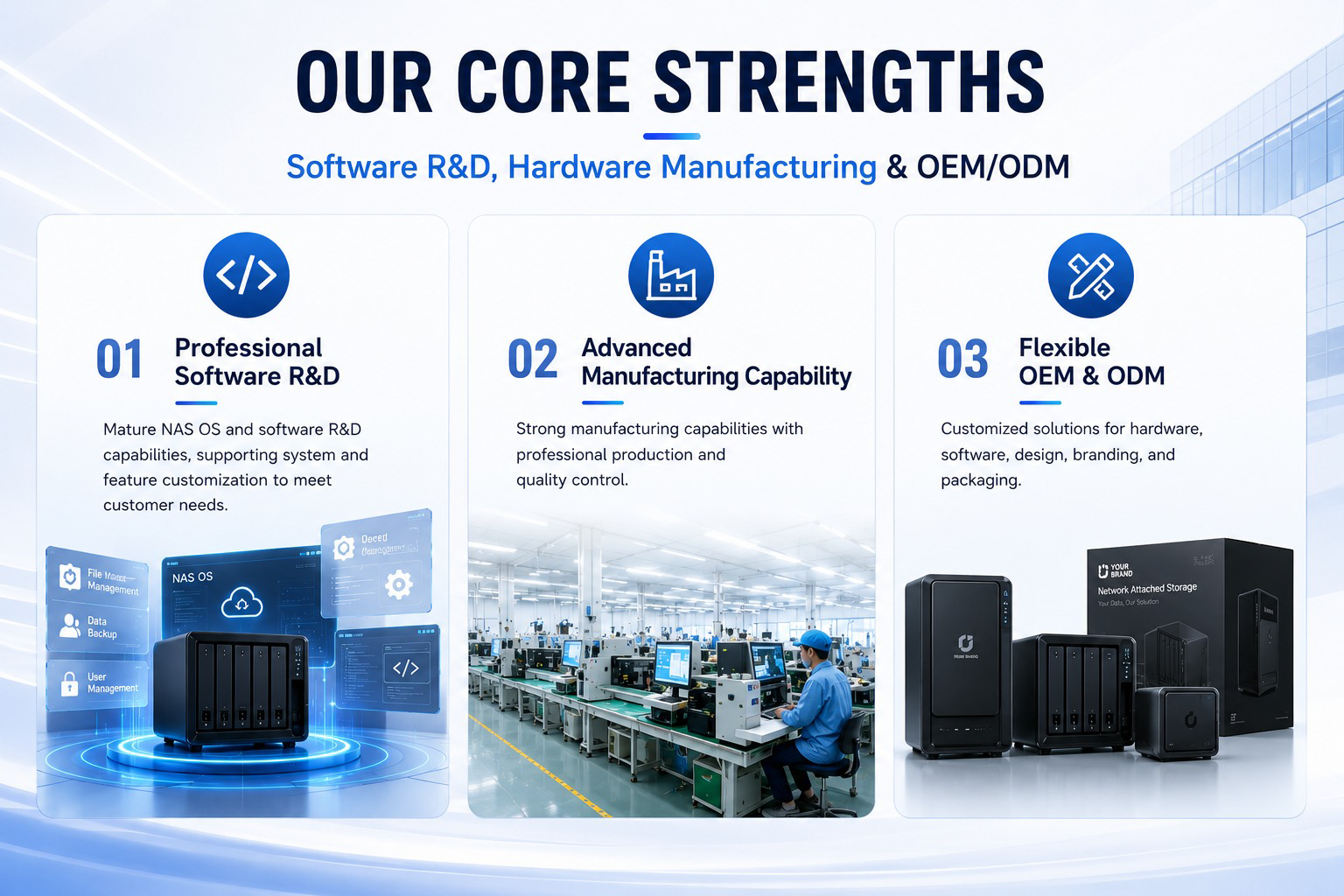
An OEM NAS program starts with a configuration proposal, not a contract. Share your target market and expected volume, and the manufacturer returns the full datasheet, the OEM options matrix and a unit configuration. The woCyber OEM / ODM service overview, the A2 Pro platform page and the S1 security kit page document everything described in this guide — including the published specifications, the customization matrix and the 100-unit MOQ that anchors the program.
White Label NAS Program for Regional Distributors: SKU Ladder, Branding Rights and Launch Costs A white label NAS for regional distributors is…
October 1, 2026Retail NAS SKU for Big Box Channel Partners: How Retailers Specify a Storage Line A retail NAS SKU for big box channel…
September 30, 2026NAS Manufacturing USA: Sourcing Guide for 2026 Brands Most NAS manufacturing USA comparisons start with the assembly line. The invoice disagrees. On…
Ask our export team for the OEM/ODM cooperation guide and a written quotation.