Leo · 2026-09
A procurement team that picks the storage platform and the storage supplier in the same meeting usually gets one of the two wrong. Selecting a NAS manufacturer for enterprise deployment is a continuity exercise — documents, ceilings and commitments that only bite in year three — while platform selection is a specification exercise built on published parameters. This checklist keeps the two apart, in the order that protects the rollout: what to verify inside a factory, which ceiling decides the platform, how the capacity arithmetic lands, and what has to be in writing before a sample is booked.
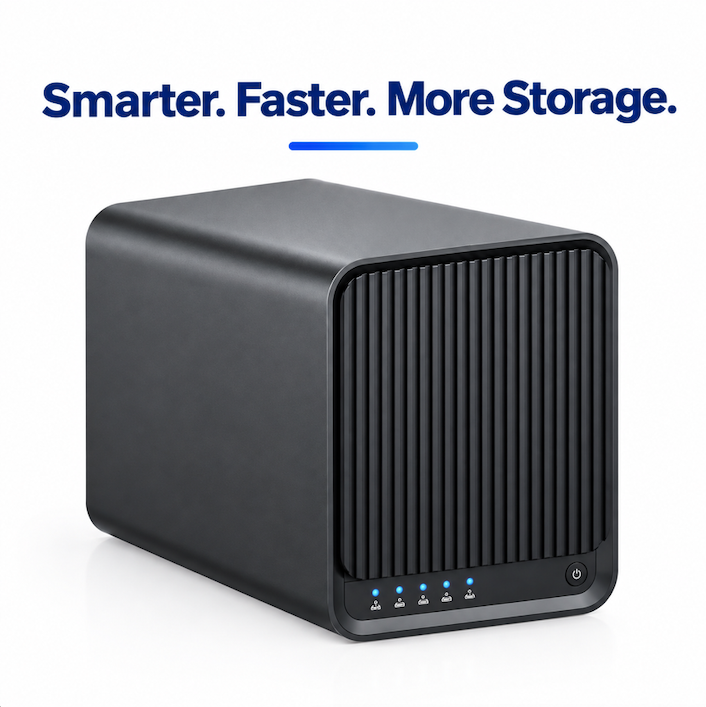
A NAS manufacturer for enterprise is a factory that builds storage hardware to a buyer’s specification and takes responsibility for the platform it ships, rather than reselling someone else’s. Five answers expose the difference faster than any factory tour: who owns the tooling, who signs the outgoing inspection records, who holds spare parts, who answers when a firmware update breaks a driver, and who will name the site where the units are assembled.
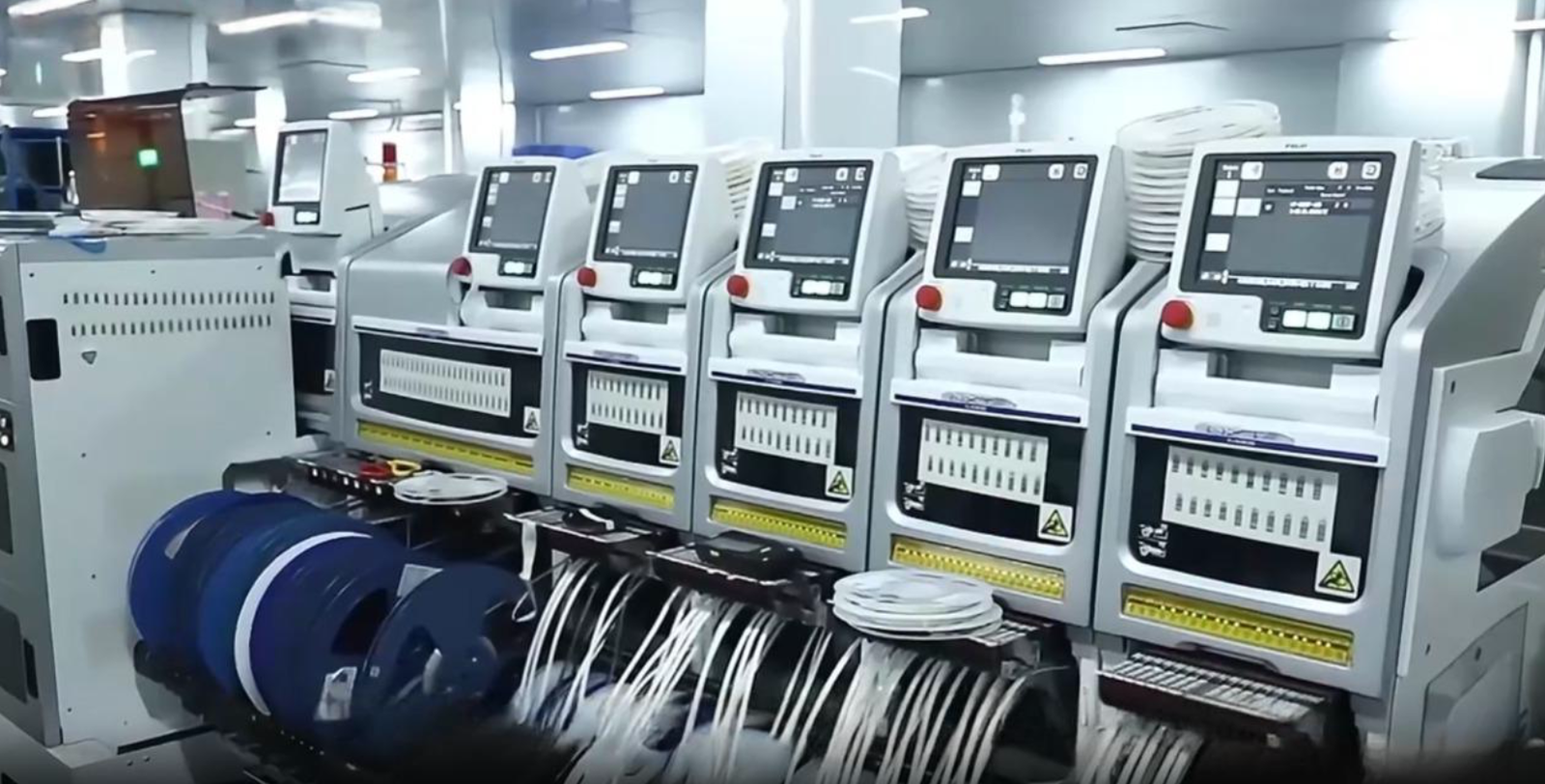
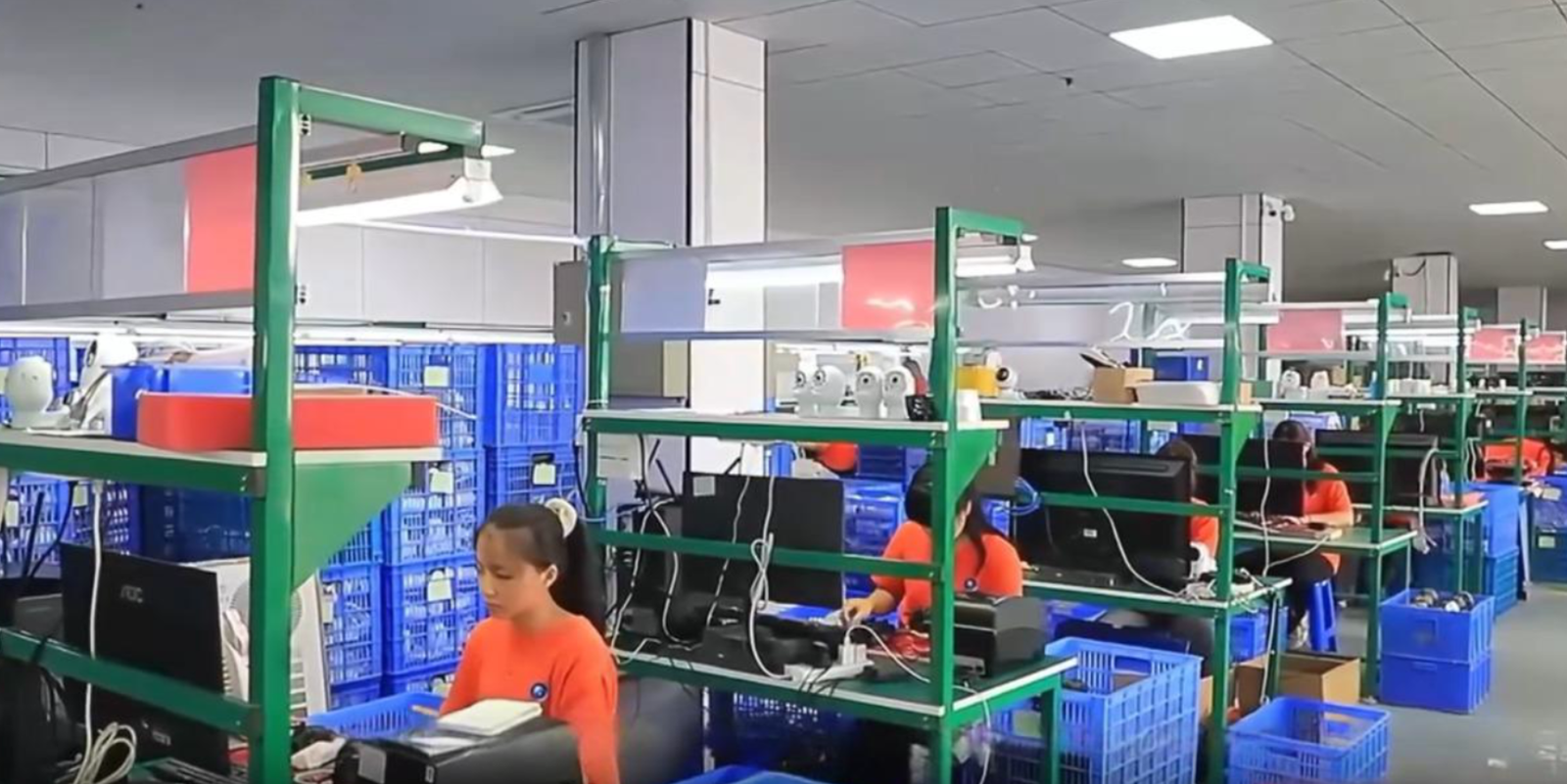
woCyber is an OEM/ODM storage manufacturer with R&D in Beijing and mass production in Shenzhen. Its published record — 15+ years in storage hardware, 500K+ units shipped, 30+ export markets and monthly capacity scalable to 20,000+ units — is exactly the kind of claim a buyer should verify rather than accept, which is why all five answers belong in writing before a purchase order exists.
Four ceilings decide a multi-year deployment: bay count, the memory ceiling rather than the memory fitted today, the network path, and the maximum capacity the chassis is rated for. Of the four, memory and network are the ones that cannot be fixed with a later purchase order — everything else is a drive order.
| Platform | Bays | Processor | Memory | Network | RAID | Max capacity |
|---|---|---|---|---|---|---|
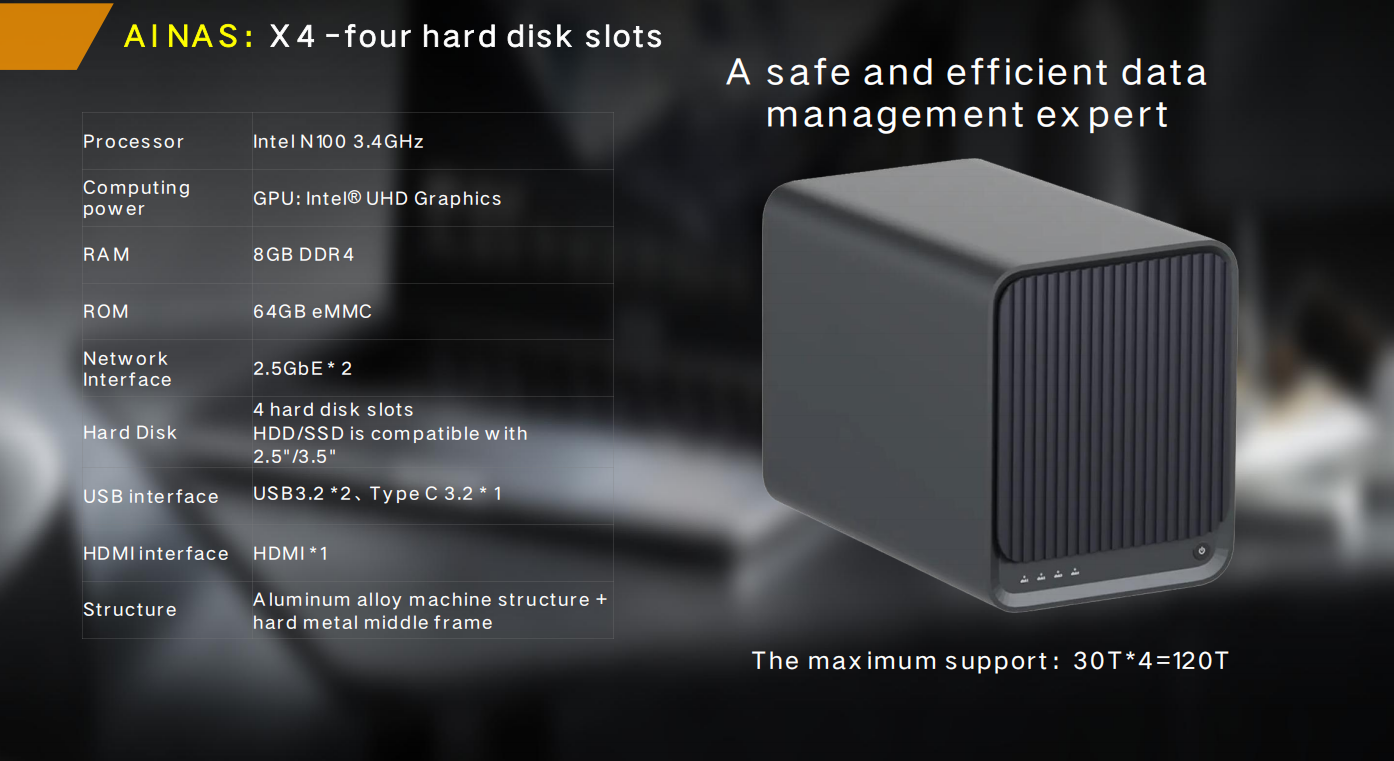
| X4 | 4 | Intel N100 | 8 GB DDR4 (OEM to 16 GB) | 2×2.5GbE, aggregation or failover to 5 Gbps | 0 / 1 / 5 / 6 / 10 | 120 TB |
| S2 | 2 | RK3568 + 1 TOPS NPU | 4 GB DDR4 | 1×2.5GbE | Not published | 60 TB |
| A2 Pro | 2 | RK3568 + 1 TOPS NPU | 4 GB DDR4 | 1×GbE | 1 | 48 TB |
| A3 Pro | 1 | RK3566 | Not published | 1×GbE | Not published | 30 TB |
Two rows carry the weight. The X4 is the only platform in the range with two 2.5GbE ports, so it is the only one that can aggregate links — which matters when several teams pull from one store at once. The A2 Pro uses RAID 1 only, a mirror, which is right for a small two-bay store and wrong for an archive that grows by project. Note also that two RAID entries read Not published: an unpublished parameter is a question for the supplier, not a blank to be filled in by whichever bid looks better. woCyber publishes the platform parameters it will stand behind; anything outside that list should be quoted as Not published rather than assumed. The adjacent question — what a platform must do beyond storing files — is covered in our guide to AI-ready NAS hardware requirements.
Raw capacity is bays × drive size. Usable capacity is where plans turn optimistic.
Usable capacity = (bays − parity drives) × drive size, for RAID 5 and RAID 6
A fully populated 4-bay X4 with 30 TB drives holds four bays × 30 TB = 120 TB raw, matching the published platform ceiling. RAID 5 reserves one drive for parity, so usable capacity is 3 × 30 = 90 TB. RAID 6 reserves two, leaving 2 × 30 = 60 TB. RAID 10 mirrors and stripes across pairs, so the same four drives yield 2 × 30 = 60 TB usable with the fastest rebuild of the three.
Now size the workload against those numbers. An archive of 2,000 completed projects at 40 GB each is 40 GB × 2,000 = 80,000 GB, or about 78 TB usable. That fits inside the 90 TB a RAID 5 layout leaves on four 30 TB drives, with roughly 12 TB of headroom. The same 78 TB does not fit into the 60 TB that RAID 6 leaves. One subtraction therefore decides whether the specification says RAID 5 or adds bays, and it belongs in the requirements document rather than in a conversation after the drives arrive. Teams that also hold cold data separately should settle the tier split at the same time; the cold data storage tiering plan works through that calculation.
Four files decide whether a delivery stays clean two years later: the certification file for the exact configuration ordered, the batch test record, the spare-parts commitment, and the retail compliance pack.
The certification file covers CE, UKCA, FCC, RoHS, REACH and WEEE, plus an ISO 9001 certificate for the quality system and an ONVIF conformance statement where cameras are in scope. The FCC entry follows the equipment authorization rules published in 47 CFR Part 15, which apply to the finished device regardless of where it was assembled. The batch record is the operational one: 72-hour burn-in per unit and 100% outgoing inspection, archived by batch so a failure can be traced to a lot rather than to a year. The spare-parts commitment states the supply window. The retail compliance pack covers EAN and UPC coding, WEEE and producer responsibility marking, and country-of-origin marking for the destination market.
Ask for all four in the same request. A supplier that can produce the certification file but not the batch records is documenting a product; the one that produces both is documenting a process, and the second is what a multi-year rollout actually depends on.
Three: hardware warranty on the platform, spare-part supply for the project lifecycle, and the pilot terms that let a volume order reuse the pilot build. The platform warranty runs 3 years, and the spare-part window is agreed with the platform specification rather than discovered when the first unit fails.
The pilot has a shape worth settling early. Reconfiguration on an existing platform starts at 100 units per SKU; a project that needs a new PCB respin or new enclosure tooling starts at 1,000 units. Samples are charged at the published unit price and credited in full against the first mass-production order, and non-recurring engineering is quoted per project and credited against agreed volume. The sample stage is where the questions a photograph cannot answer get resolved: whether the chassis fits the space it will occupy, how the drive trays handle for someone who has never swapped one, whether a firmware update survives being interrupted mid-write, and whether the carton and label artwork survive a courier journey intact.
Consider a systems integrator standardizing twelve client sites on a single hardware family: two 4-bay nodes for the sites with CAD and render traffic, ten 2-bay nodes for branch offices, one firmware baseline and one spare-parts pool. The trade-off is between buying the cheapest node for each site and buying one family that can be swapped between roles. The second costs more at the first order and less at every service call after it, because a spare node can be moved from a branch to a studio without re-qualifying anything. Running the pilot as a reconfiguration of the platform that will carry the volume order — the 4-bay X4 for the central store, the 2-bay S2 for branch nodes — keeps the pilot result transferable instead of creating a parallel project.
Verification can run alongside the pilot rather than after it. Third-party factory audits (SGS, Bureau Veritas or TUV) can be arranged on request, as can a video walkthrough or a customer engineer visiting the line. An audit request should be treated as routine; a supplier that treats it as an unusual favor is signalling something about the next five years. How to read what comes back is covered in our guide to vetting NAS server manufacturers, and the volume-order paperwork in the RFQ comparison guide. WoCyber’s own manufacturing scope is documented on the factory page, and the platform range is listed at products.
Three failure modes account for most of it, and none of them is about price.
A documented platform specification with the memory and capacity ceilings stated separately from the fitted configuration, the certification file for the exact configuration quoted, tooling ownership terms, and the pilot structure with its quantity tiers and sample-credit terms.
Reconfiguration orders on an existing platform start at 100 units per SKU. A project that requires a new PCB respin or new enclosure tooling starts at 1,000 units, since the tooling investment has to be spread over a larger build.
RAID 5 leaves the usable capacity of all but one drive and suits archives where rebuild time is acceptable. RAID 6 survives two simultaneous drive failures, which matters where a second failure during a long rebuild is a real risk. RAID 10 costs half the raw capacity but rebuilds fastest.
Hardware warranty on the platform is 3 years, and spare-part supply runs for the project lifecycle. Confirm the supply window in writing at the point the platform specification is agreed, not at the point the first unit fails.
CE, UKCA, FCC, RoHS, REACH and WEEE for the product range, with an ISO 9001 certificate for the quality system and an ONVIF conformance statement where cameras are in scope. Ask for the reports that match the configuration on the purchase order.
X4 delivers Intel N100 performance, dual 2.5GbE with link aggregation up to 5 Gbps, RAID 0/1/5/6/10 and up to 120 TB — built for integrators and commercial deployments.
White Label NAS Program for Regional Distributors: SKU Ladder, Branding Rights and Launch Costs A white label NAS for regional distributors is…
October 1, 2026Retail NAS SKU for Big Box Channel Partners: How Retailers Specify a Storage Line A retail NAS SKU for big box channel…
September 30, 2026NAS Manufacturing USA: Sourcing Guide for 2026 Brands Most NAS manufacturing USA comparisons start with the assembly line. The invoice disagrees. On…
Ask our export team for the OEM/ODM cooperation guide and a written quotation.