Leo · 2026-09
The cost of data egress from cloud is a metered fee charged every time data leaves a provider’s network. AWS publishes $0.09 per GB for the first 10 TB per month, after a 100 GB monthly free allowance. Once outbound volume becomes predictable, that meter behaves like rent — and a buy-out appliance becomes easier to justify on arithmetic alone.

Egress is outbound data transfer: any byte that leaves a cloud provider’s network for the public internet, for another region, or for another availability zone inside the same region (an availability zone is a physically separate data center cluster within one cloud region). Providers meter it separately from storage because the two costs behave differently — storage is a capacity cost that scales with how much you keep, while egress is a transport cost that scales with how often you read and move it.
That split matters more now than it did during the first wave of cloud migration. Teams moved archives, media libraries, backups and camera footage into object storage because capacity was cheap and elastic, and the movement charge was a line item nobody modelled. Data has a way of staying where it lands, so the outbound volume rarely falls after year one — it usually grows with the business, while the storage bill flattens. When a cost line grows with usage rather than with capacity, it eventually deserves its own model.

AWS published egress pricing starts at $0.09 per GB for the first 10 TB per month, then steps down to $0.085, $0.07 and $0.05 per GB as monthly volume rises. The first 100 GB per month is free, and the rate tiers aggregate data transfer out across a provider’s services in the same region, not just storage.
Those figures are taken from the Amazon S3 pricing page, retrieved September 23, 2026, and they are the clearest public example of how outbound pricing is structured across the industry: a free allowance, then descending steps. Competing providers publish comparable per-GB schedules, so what transfers between them is the shape of the meter rather than the exact rate. The table below models what that meter does at five common monthly volumes.
| Monthly egress | How the tiers apply | Modelled monthly egress fee |
|---|---|---|
| 1 TB | 1,024 GB − 100 GB free = 924 GB at $0.09 | $83.16 |
| 5 TB | 5,120 GB − 100 GB free = 5,020 GB at $0.09 | $451.80 |
| 10 TB | 10,240 GB − 100 GB free = 10,140 GB at $0.09 | $912.60 |
| 25 TB | 10,140 GB at $0.09 + 15,360 GB at $0.085 | $2,218.20 |
| 50 TB | 10,140 GB at $0.09 + 40,960 GB at $0.085 | $4,394.20 |
The model assumes 1 TB = 1,024 GB, subtracts the monthly free allowance from the first tier, and applies the first two published steps. Storage, request and retrieval charges are separate, and your own provider’s schedule should be substituted before any decision is taken.
Egress appears in four places that rarely make it into a forecast: reads that cross an availability zone boundary, copies that cross a region, retrieval from an infrequent-access storage class, and traffic that leaves through a NAT gateway instead of a private endpoint. Each has a published rate, and each is invisible until someone maps the data path.
The zone boundary is the one that surprises teams most, because it is an internal design choice rather than an internet-facing one. Putting the analytics worker in a different availability zone from the bucket turns every read into a billable transfer. Cross-region copies add a second meter when replication is used for disaster recovery. Cold storage classes trade a lower storage rate for a retrieval charge, which is a good trade until an audit or a legal request pulls a large volume back. And when a workload reaches storage through a NAT gateway rather than a private endpoint, it picks up the gateway’s own per-GB processing charge on top of everything else.
There is also the recovery case. A restore after an outage, or a bulk re-download of an archive by a client, is egress again — the same bytes billed twice in a year for companies that treat the cloud as both backup and distribution. If you are the IT manager at a 50-person practice, the question worth putting in front of finance is not “what does storage cost” but “how much of this bill is data we move rather than data we keep”.
Work from the transfer log, not from the invoice. The calculation has three steps: convert monthly outbound volume to gigabytes, subtract the free allowance, then apply the published steps in order.
The formula is: billable GB = (monthly GB out − free allowance); cost = (first-tier GB × first-tier rate) + (second-tier GB × second-tier rate), and so on down the steps. Take a labeled example — a hypothetical 50-person architecture practice that publishes 15 TB a month of drawings, renderings and site photography to clients and field staff:
Nothing in that arithmetic is specific to architecture, and nothing in it is a prediction. Substitute your own outbound volume and your provider’s published steps, and the model tells you the size of the problem before anyone proposes a solution.
A buy-out appliance wins when the removable metered volume is large enough that a few months of egress approaches the one-time hardware cost, and when the data does not actually need to be reachable from anywhere on the internet. The second condition is the one that decides most cases, and it is a question about usage rather than about price.
The break-even formula is: break-even months = (appliance + drives + one-time setup) ÷ monthly metered cost removed. Continuing the labeled example, the practice removes $1,347.80 of modelled monthly egress. The published single-unit reference price of an X4 four-bay NAS server is $400, excluding shipping and duties and before drives, which works out at $400 ÷ $1,347.80 ≈ 0.3 of a single modelled month. That is arithmetic on two published numbers, not a quotation and not a promise: drives, shipping, duties and installation are separate line items, and any capacity the firm still keeps in the cloud stays on the bill.
What that comparison is really measuring is the read pattern. If the drawings are opened dozens of times in the week they are issued and almost never afterwards, the outbound traffic is a working-set problem, and a local appliance with gigabit or 2.5GbE networking serves the working set without a meter running. If the same files are published to thousands of external users on demand, a distributed delivery layer is doing real work and the egress fee is buying something. Most companies are running both patterns at once, which is why the useful first step is a report that splits outbound traffic by bucket, by user group and by age of data. For teams that need a hands-on model of what replacing the metered path looks like, woCyber builds the X4 as a four-bay platform with an Intel N100 processor, 2×2.5GbE ports that can be aggregated or used as failover, RAID 0/1/5/6/10 and up to 120 TB, and sells it factory-direct with OEM/ODM options from 100 units per model.

Size the local copy from the data you re-read, not from the archive you almost never touch. A working set of two to five years of active project data is usually a small fraction of total stored bytes, and it is the only part that was generating egress.
Capacity arithmetic decides the rest. With four 30 TB drives in a four-bay enclosure the raw figure is 120 TB; RAID 5 uses one drive’s worth of that for parity, leaving 90 TB usable, while RAID 10 halves it to 60 TB in exchange for a different failure profile. That is the same calculation used for camera recording tiers, where the retention window rather than the camera count sets the capacity — the approach in our notes on sizing storage for video surveillance retention. It is also worth keeping one tier purely local: the copy that is never published anywhere cannot generate an egress charge.
Teams that have already priced the alternative will recognize the behavior described in why cloud storage starts to feel too expensive for small teams: the bill stops tracking the value delivered.
No. Storage is billed per GB-month, requests are billed per thousand, retrieval from infrequent-access classes is billed per GB, and cross-region copies and cross-zone reads carry their own transfer rates. Egress is simply the line that grows with usage patterns rather than with stored volume, which is why it deserves separate modelling.
Yes. Restoring from a bucket is outbound transfer, and so is any bulk re-download after an incident. Companies that use the same bucket as both an archive and a distribution point pay for the same bytes twice: once when the data is published, and again when it is pulled back.
Tag the transfer lines. Cost allocation tags on the bucket, plus a monthly export of the transfer line, will split outbound volume by owner, by bucket and by age of data. Most teams find that one or two buckets account for the majority of the transfer spend once the report exists.
Often, yes. Keeping compute in the same availability zone as the storage it reads, reaching storage through a private endpoint rather than a NAT gateway, and serving public content through a delivery layer instead of the bucket directly each remove billable transfer without changing what the application does. The remaining volume is the part worth moving.
Drive bays and capacity ceiling, the network interfaces and whether they aggregate, RAID levels, transcoding needs for media workloads, and how the vendor sells — direct from the factory with documented certifications, or through an intermediary. woCyber’s X4 NAS server page lists the published specifications, and the product overview shows the smaller two-bay tiers next to it.
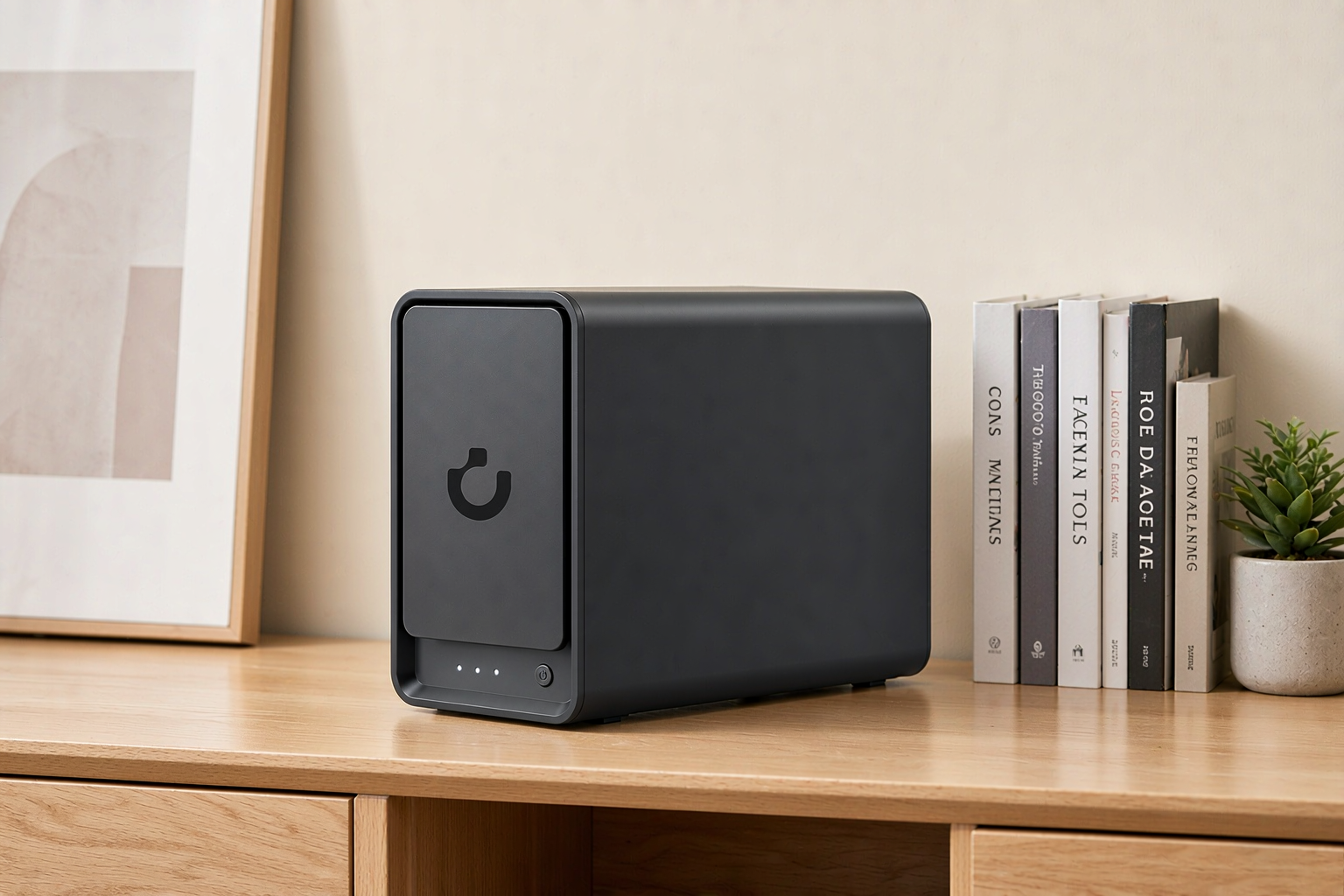
X4 delivers Intel N100 performance, dual 2.5GbE with link aggregation up to 5 Gbps, RAID 0/1/5/6/10 and up to 120 TB — built for integrators and commercial deployments.
White Label NAS Program for Regional Distributors: SKU Ladder, Branding Rights and Launch Costs A white label NAS for regional distributors is…
October 1, 2026Retail NAS SKU for Big Box Channel Partners: How Retailers Specify a Storage Line A retail NAS SKU for big box channel…
September 30, 2026NAS Manufacturing USA: Sourcing Guide for 2026 Brands Most NAS manufacturing USA comparisons start with the assembly line. The invoice disagrees. On…
Ask our export team for the OEM/ODM cooperation guide and a written quotation.