Leo · 2026-09
European NAS manufacturer is a label applied to at least three different supply structures, and the structure decides what an EU distributor or brand owner can enforce once the order is signed. This guide separates the three, lists the compliance documents a European buyer asks for before price is opened, and sets out the terms to fix in writing before tooling is cut.
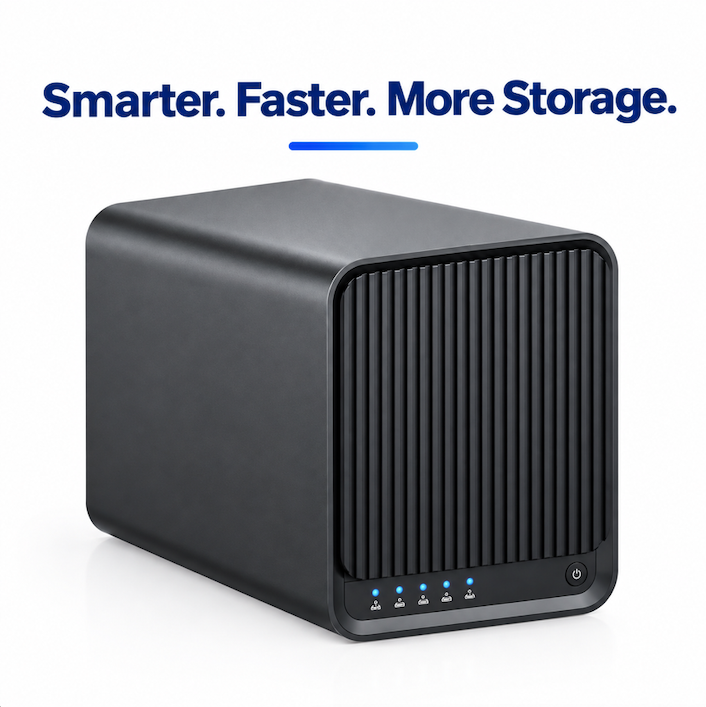
A European NAS manufacturer is any supplier whose product reaches the EU market with a European documentation set, but the factory behind that documentation can sit in three very different places.
When the marketing language hides the structure, one question separates them: who signs the declaration of conformity, and who owns the firmware image? Only an entity that does both can re-configure a platform for you without going back to a third party. woCyber is the second structure in that list: head office and R&D centre in Beijing, mass production in Shenzhen, product documentation issued for the model, and firmware maintained by the same engineering team that writes it.
Public-sector, healthcare, legal and financial buyers in the EU screen documentation before the commercial envelope is opened. A missing declaration is not a negotiating position; in a formal tender it is a disqualification, and in a private purchase it delays the project by weeks.
The file for a NAS appliance is short but specific, and every item has to name the model, not the product family:
Three of these are published in full in the Official Journal, and it is worth reading them rather than a reseller’s summary: the RoHS Directive and the WEEE Directive on EUR-Lex, and the CE marking rules on the European Commission’s single-market pages.
A supplier that offers a data protection certificate where a product declaration should be is describing a document that does not exist: data protection compliance is an organisational position held by the controller, not a product badge. What a supplier can legitimately provide is the product-level set above, quality evidence from the plant, and a configuration that keeps processing on the customer’s own premises.
For regulated buyers, the appliance question is really a location question. An on-premises NAS keeps the data set on disks that sit in the customer’s own server room or office cabinet, administered by the customer’s own staff, with local deployment and access audit under the customer’s control rather than a vendor’s. No mandatory cloud dependency is involved in that design.
The structural point that European procurement teams raise most often is the reach of the US CLOUD Act. Where a provider can technically reach a data set, a disclosure order can be served on that provider regardless of which country the disks are standing in. Where the data sits on equipment that the operator alone administers inside its own building, there is no third party in the path that could be required to hand over something it cannot reach. That is a statement about architecture, not a compliance badge — and it is the reason buyers ask to see the administration model rather than the encryption slide.
Practical questions that follow from it: who holds the administrator account, where the access log is written, whether that log can be exported for the data protection record, and what deletion looks like at the end of a retention period.
| Structure | Who builds, and where | Who owns design and tooling | Documentation available | Main risk to manage |
|---|---|---|---|---|
| Own-design EU manufacturer | In-house plant inside the EU | The manufacturer | Full set, in the manufacturer’s name | Higher unit cost; roadmaps driven by the manufacturer’s own channel |
| Export OEM / ODM manufacturer | Buyer-specified build outside the EU | Buyer, once tooling is paid | Product-level set plus plant quality evidence | Longer logistics chain; buyer must own the specification and the audit schedule |
| EU rebranding or assembly operation | Imported hardware, brand applied locally | Usually the original factory | Dependent on the upstream factory | Thin engineering access; change requests travel through an intermediary |
None of the three is automatically wrong. The failure mode is buying the third structure while believing you contracted a European NAS manufacturer with its own plant: the price looks European, the engineering contact is not, and the first change request exposes the gap.
A first order is a risk trade. Both sides fund something before revenue exists, so the terms worth negotiating are the ones that decide who carries that exposure.
An NDA costs nothing and should be signed before you send a specification. If a supplier negotiates the tooling clause but hesitates over a mutual NDA, that is information about how the relationship will run.
Two costs commonly get decided by the order quantity rather than by the quotation: fixed logistics and inspection charges, and tooling. Both are simple to model before you commit.
Per-unit fixed cost = fixed batch cost ÷ order quantity. If a first batch carries a EUR 1,200 fixed budget for consolidated freight and a third-party pre-shipment inspection, the arithmetic is: 1,200 ÷ 100 = EUR 12.00 per unit; 1,200 ÷ 300 = EUR 4.00 per unit; 1,200 ÷ 600 = EUR 2.00 per unit. The fixed charge does not change; only the number of units it is spread over does.
Tooling cost per unit follows the same shape: tooling NRE ÷ units, before any volume credit. At EUR 6,000 of tooling, 6,000 ÷ 1,000 = EUR 6.00 per unit on a 1,000-unit order, falling to EUR 0.00 per unit once the agreed volume threshold triggers the credit. Both figures are placeholders for the numbers in your own quotation; the formulas are what to take to the negotiating table.
Consider a hypothetical twelve-person Systemhaus in southern Germany bidding on its first municipal contract: roughly 40 TB of scanned records, five years of retention, and a tender that requires an on-premises appliance, a named manufacturing site, material declarations and a spare-part commitment.
Three options sit on the table. Rebranded imported hardware is the cheapest per unit, but the tender asks for the manufacturing site and the declaration chain stops at the importer, so the bid risks a formal question it cannot answer. An EU-assembled platform answers the documentation question comfortably but doubles the unit cost and locks the archive interface to that vendor’s roadmap. The third option — an export OEM platform built to the integrator’s specification, with the integrator owning the tooling and the model documentation — costs more than rebranding and less than the EU-assembled route, and comes with a named plant in Shenzhen, batch records per shipment and the right to commission an SGS or TÜV inspection before shipping.
The trade-off the Systemhaus accepts is logistics: a longer inbound chain and an audit schedule it has to run itself. The trade-off it refuses is invisibility — a supply chain where nobody can name the plant when the tender asks.
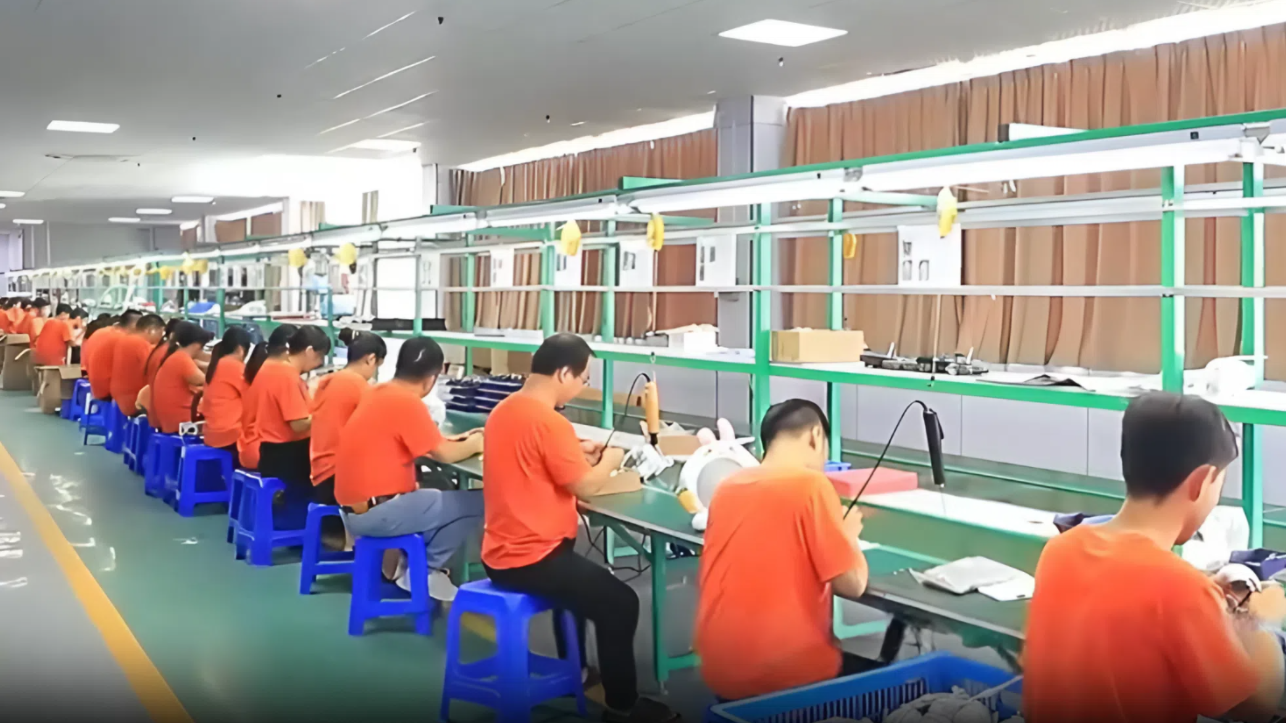
Remote verification is normal now, but its limits are worth knowing exactly.
A supplier that offers both channels without being pushed — scheduled visits, agency audits and video sessions on request — is telling you something about how much of its process is repeatable.
| Platform | Bays | Published capacity | Network | Typical EU deployment |
|---|---|---|---|---|
| S2 Dual-Bay Smart Storage Hub | 2 | 60 TB | 1 × 2.5GbE | Branch or practice storage where the unit sits near people; rigid steel mid-frame inside an ABS shell to control drive vibration and noise |
| A2 Pro Compact NAS | 2 | 48 TB | 1 × GbE | Small practice running file storage plus ONVIF / PoE cameras on RAID 1 |
| X4 Enterprise NAS Server | 4 | 120 TB | 2 × 2.5GbE, link aggregation up to 5 Gbps | Server-room rollout with RAID 0 / 1 / 5 / 6 / 10, tool-less 2.5" and 3.5" trays, optional NVMe cache and 10GbE |
| A3 Pro Compact NAS | 1 | 30 TB | 1 × GbE | Single-site edge or signage unit with HDMI 4K at 60 Hz and low-power 24/7 duty |
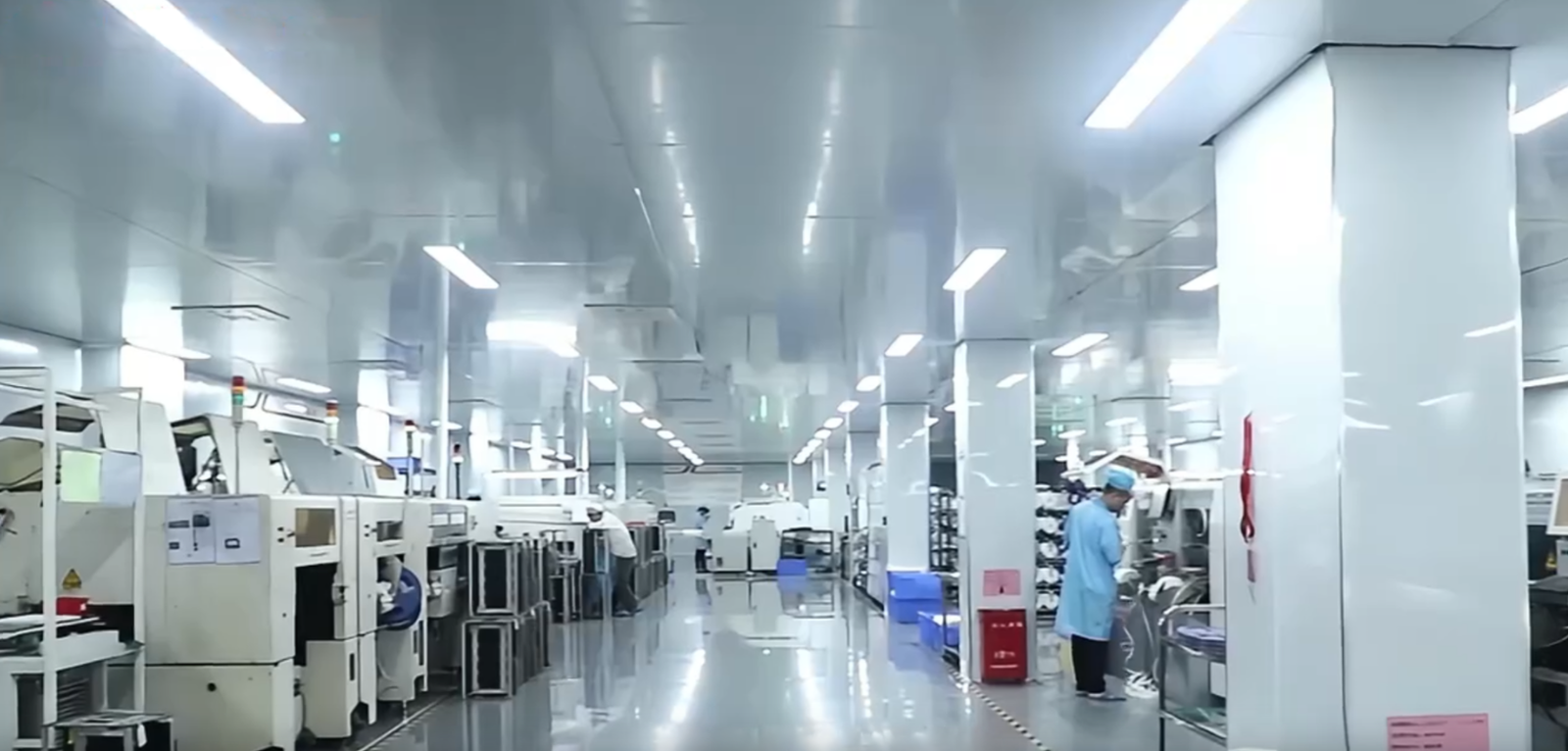
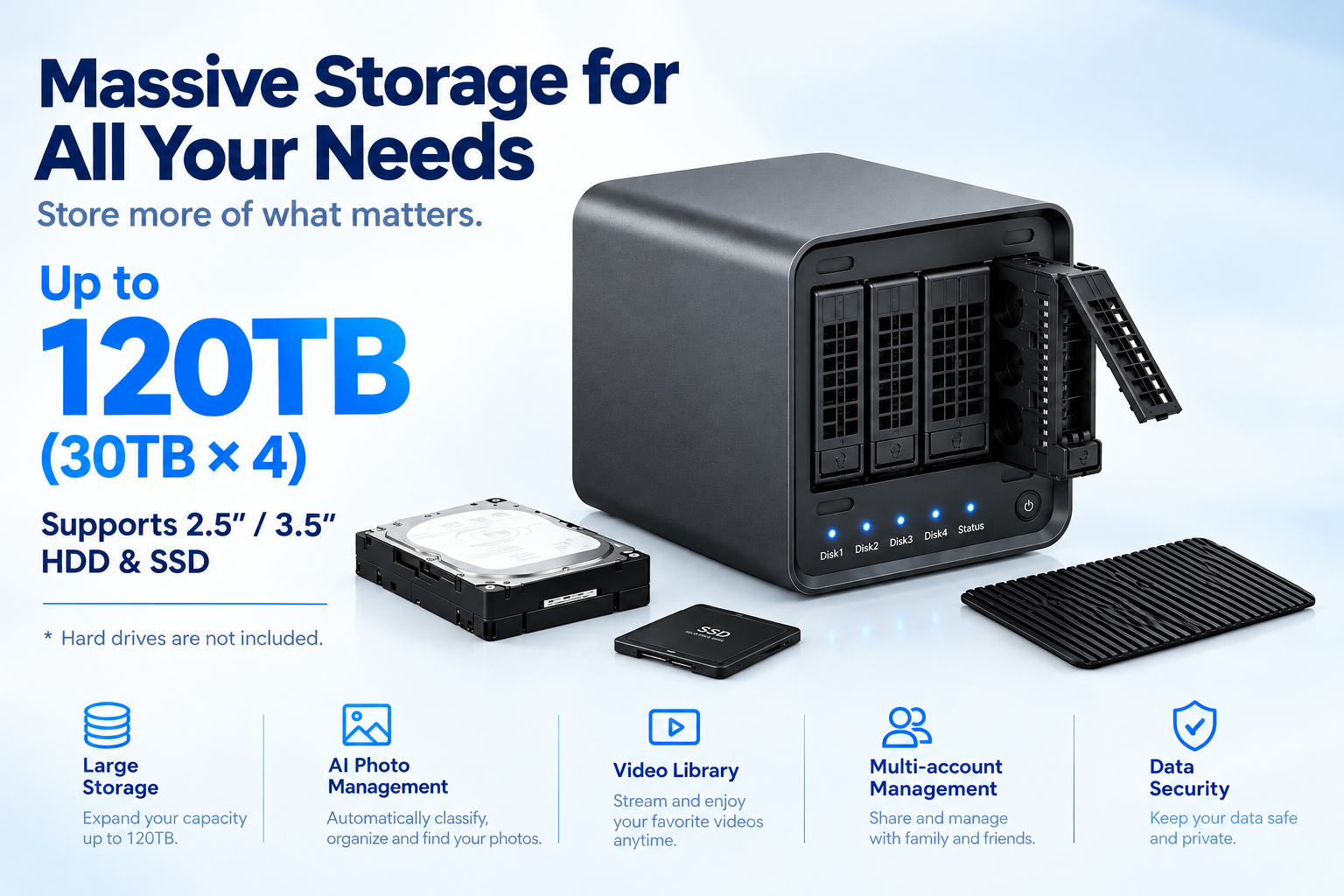
If a tender calls for link aggregation, parity RAID and headroom for a 10GbE upgrade later, the platform woCyber builds for that class is the X4 enterprise NAS server. Where the constraint is instead noise and continuous low-power operation in a room people actually work in, the S2 smart storage hub is the two-bay option designed around that requirement. The hardware and firmware customisation behind both platforms is described on the OEM / ODM services page.
Assemble one document before the purchase order. First, the structure statement: who builds the unit, in which plant, and who signs the declaration of conformity. Second, the documentation list, model by model, including material declarations and the WEEE arrangement in your market. Third, the commercial terms — MOQ, sample credit, NRE credit, tooling ownership, payment split, warranty length and spare-part commitment. Fourth, the verification plan: what you will audit, which agency, how many units and at which stage. Fifth, the firmware policy: who maintains the image, who can change it, and how updates are delivered.
Buyers who already run hardware qualification will recognise the shape of that file from other product categories. The category-specific parts are the data-location model and the firmware branch — the two places where a storage appliance differs from a commodity device. Our own quality and certification pages and the manufacturing page show what a supplier should be publishing before you ask; a short background read is what OEM NAS manufacturing covers, and the commercial structure of a branded line is set out in the OEM project guide. Integrators who bundle storage with connectivity services start from the same file — the channel view is described in sourcing storage as a bundled service.
Can we buy from a manufacturer outside the EU and still satisfy EU documentation requirements? Yes. Conformity and material declarations are issued for the product and the model, and the producer-responsibility duties for WEEE and packaging fall on the party that places the goods on the market. Ask for the declaration set model by model, and confirm who signs it.
What is the minimum order quantity? 100 units per SKU when an existing platform is reconfigured. Where a new PCB respin or new enclosure tooling is needed, the threshold is 1,000 units — the level at which tooling and re-testing stop being speculative.
Do we own the industrial design and the tooling? That is the point to write into the contract. Tooling can be amortised into the unit price or invoiced separately, and ownership should transfer to the buyer on final payment, with customer-specific tooling excluded from other projects.
How do we verify quality without visiting the plant? Batch records and inspection reports archived against your serial numbers, a video walkthrough of the lines, and an audit commissioned by you with SGS, Bureau Veritas or TÜV working from your own checklist instead of the supplier’s.
Will our brand and configuration be visible to other customers? Client identities are not disclosed, firmware branches are maintained per project, and regional exclusivity can be agreed in writing against committed annual volume rather than assumed.
We are the factory: SMT to shipment under one roof, R&D in Beijing, mass production in Shenzhen. Factory-direct pricing without trading-company markups.
White Label NAS Program for Regional Distributors: SKU Ladder, Branding Rights and Launch Costs A white label NAS for regional distributors is…
October 1, 2026Retail NAS SKU for Big Box Channel Partners: How Retailers Specify a Storage Line A retail NAS SKU for big box channel…
September 30, 2026NAS Manufacturing USA: Sourcing Guide for 2026 Brands Most NAS manufacturing USA comparisons start with the assembly line. The invoice disagrees. On…
Ask our export team for the OEM/ODM cooperation guide and a written quotation.