Leo · 2026-10
A retail NAS SKU for big box channel partners is specified backwards compared with an integrator sale. The category buyer starts from the shelf price band, works out the packaging cube the planogram allows, and only then asks which platform fits inside both. Landed unit cost against the band, packaging cube against the shelf allocation, and returns profile against the category ceiling are the three figures that decide whether a SKU survives a line review.
Category buyers at national retailers do not read specification sheets the way an integrator does. They read a line review document: unit economics, shrink and returns history, packaging dimensions, and whether the product generates a support call. Specifications count only insofar as they move those four numbers. That is the whole difference between selling a NAS into a big box channel and selling one to a managed service provider, and it is the reason a technically strong platform can fail a retail review while a more modest one passes.
Put a shelf-review document next to a datasheet and the gap is obvious: the review document never lists a processor model, and it rarely lists a bay count either. Landed unit cost sets the price band; box dimensions set the shelf allocation; expected returns rate sets the warranty reserve; and expected support load sets whether the product is worth the shelf space at all.
| Review-document line | What the review document scores | Where it comes from on the supply side |
|---|---|---|
| Landed unit cost | Unit cost plus freight plus duty, against the shelf price band | Platform choice within the ladder; packaging cube; MOQ tier |
| Packaging cube | Cartons per pallet and facings per shelf position | Chassis dimensions and retail carton design |
| Returns profile | Expected returns rate and who absorbs the freight | Outgoing inspection regime and burn-in discipline |
| Support load | Calls per hundred units sold | Out-of-box experience, app pairing, documentation quality |
Only the first row is usually negotiable on price. The other three are decided by the platform and by the manufacturing discipline behind it, which is why a buyer who opens with a price demand and a buyer who opens with a returns question end up with different products.
Bay count tracks the price band more reliably than any other specification. A 1-bay unit answers a first-time buyer; a 2-bay unit answers the buyer who wants mirroring; a 4-bay unit answers the small-studio and prosumer shopper who is already comparing specifications online before entering the store.
| Price band role | Platform | What the shopper is buying | Reference list price band (site retail reference, not a program quote) |
|---|---|---|---|
| Opening price point | A3 Pro – 1 bay, RK3566, 32 GB eMMC boot storage, up to 30 TB, 1xGbE, HDMI 4K@60 | A first NAS; lowest box cost and smallest shelf footprint | $150 |
| Core volume | A2 Pro – 2 bays, RK3568 with a 1 TOPS NPU, 4 GB DDR4, up to 48 TB, RAID 1, ONVIF | Mirrored storage with a second drive bay for expansion | $170 |
| Step-up | S2 – 2 bays, 1×2.5GbE, up to 60 TB, ABS with a rigid steel mid-frame | Faster transfers; the shopper comparing network speeds | $195 |
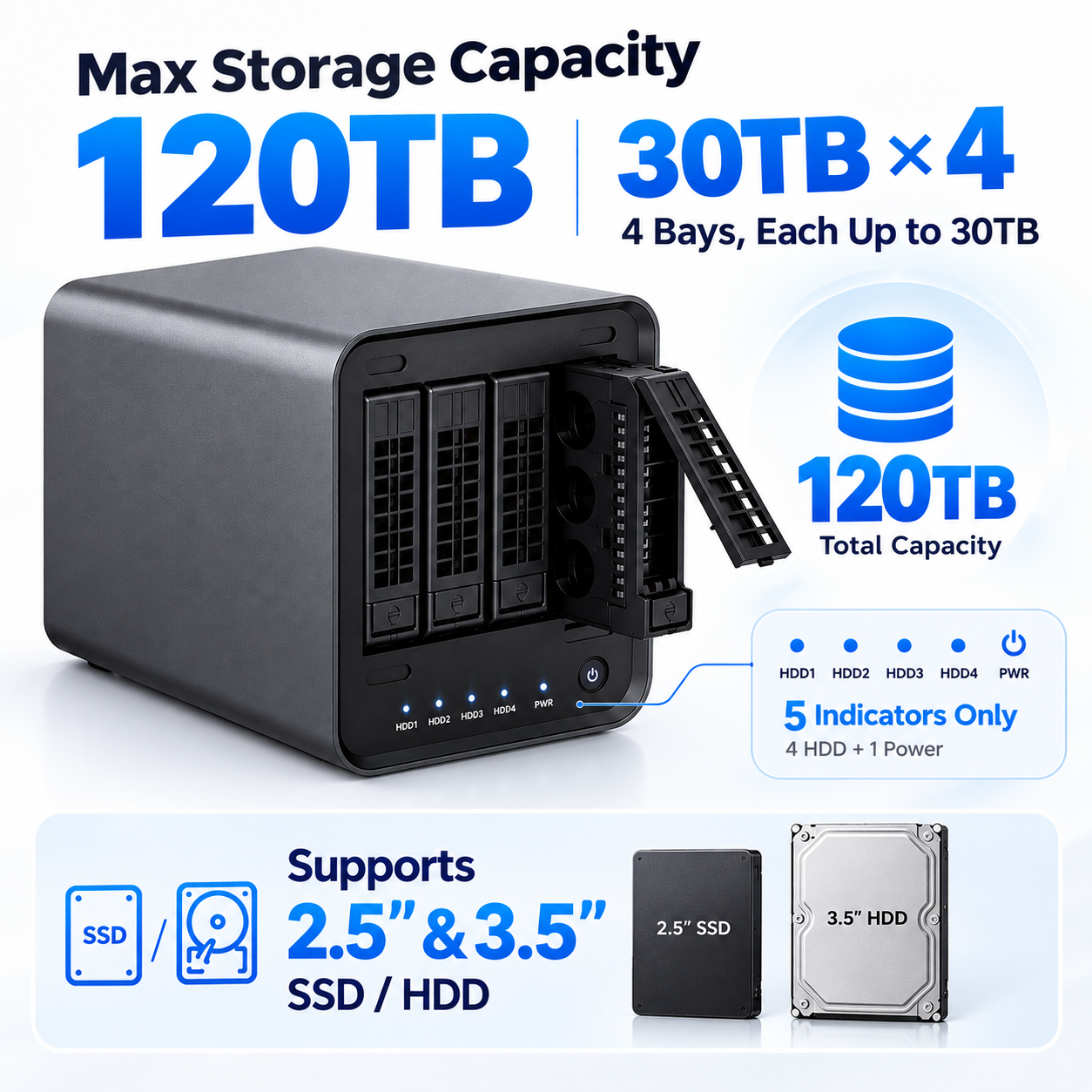
| Enthusiast and studio | X4 – 4 bays, Intel N100, 2×2.5GbE ports with link aggregation and failover, RAID 0/1/5/6/10, up to 120 TB | Multi-drive RAID and hardware 4K transcoding for media work | $400 |
Retail reference prices are published single-unit prices in USD, excluding shipping and tariffs. Wholesale, volume and private label pricing is quoted per program rather than published, with a minimum order quantity of 100 units per model.
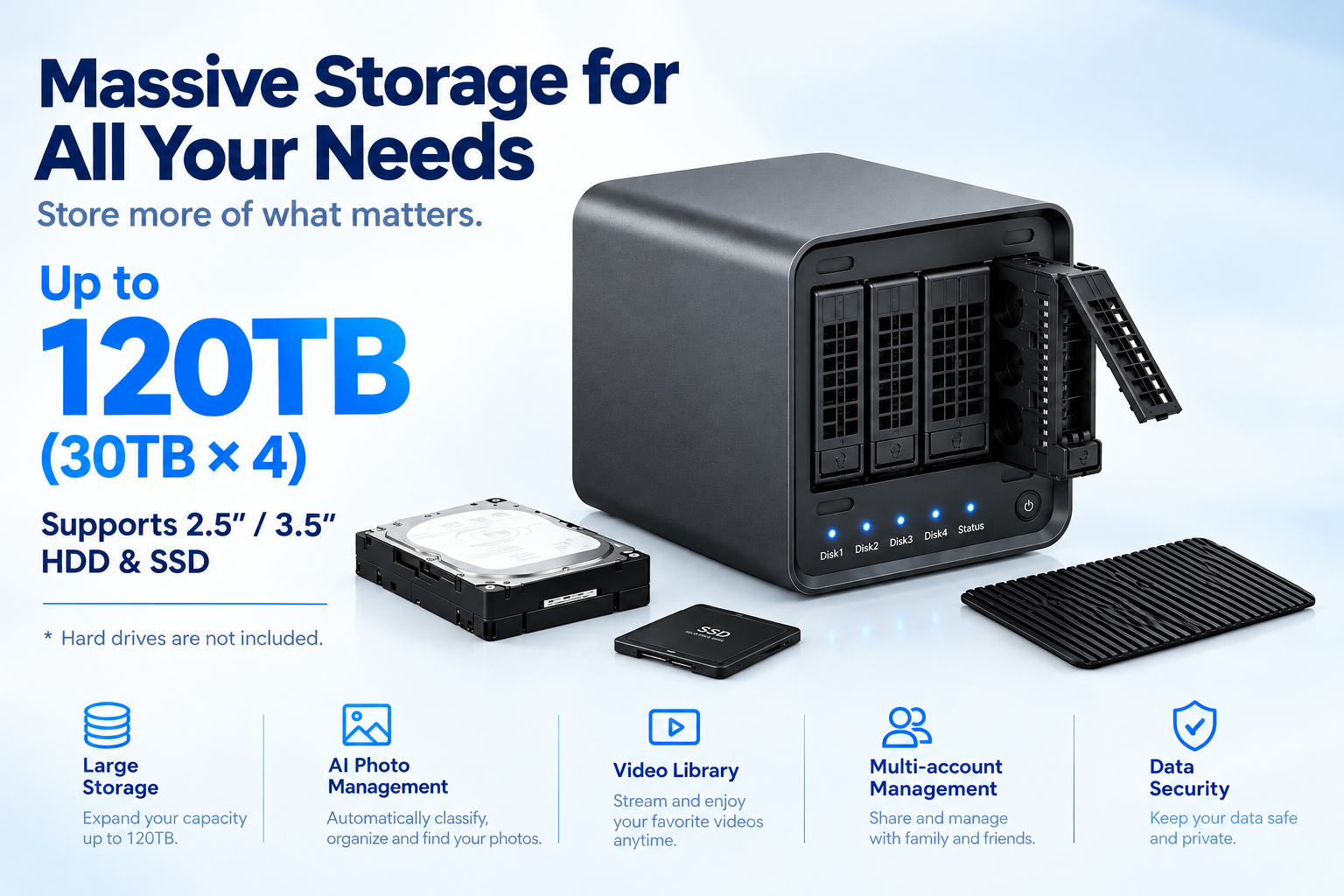
The landed-cost model is the single document that decides whether a retail conversation continues, and it is short enough to build on one page. The program terms referenced throughout this section are those woCyber publishes for OEM/ODM programs.
Formula: Landed unit cost = ex-works unit cost + allocated freight per unit + allocated duty per unit, then Gross margin = (shelf price - landed unit cost) / shelf price
Placeholder inputs: write your own quoted ex-works unit cost, allocated freight per unit and allocated duty per unit into the formula. Numbers are deliberately omitted here because quoted figures change with order volume, Incoterms and destination.
Second calculation – the returns reserve: Reserve per unit = landed unit cost x expected returns rate. Run it twice: once at your target returns rate and once at roughly double that rate. The gap between the two outcomes is the number a retail buyer weighs against the entire freight line, and it is the number a supplier’s outgoing-inspection regime is meant to shrink.
No freight, duty or shelf-price figure on this page is a quote: actual freight depends on routing and volume, and duty rates must be confirmed in writing by a licensed customs broker against the applicable tariff schedule for each destination. Substitute your own quoted inputs before using the model.
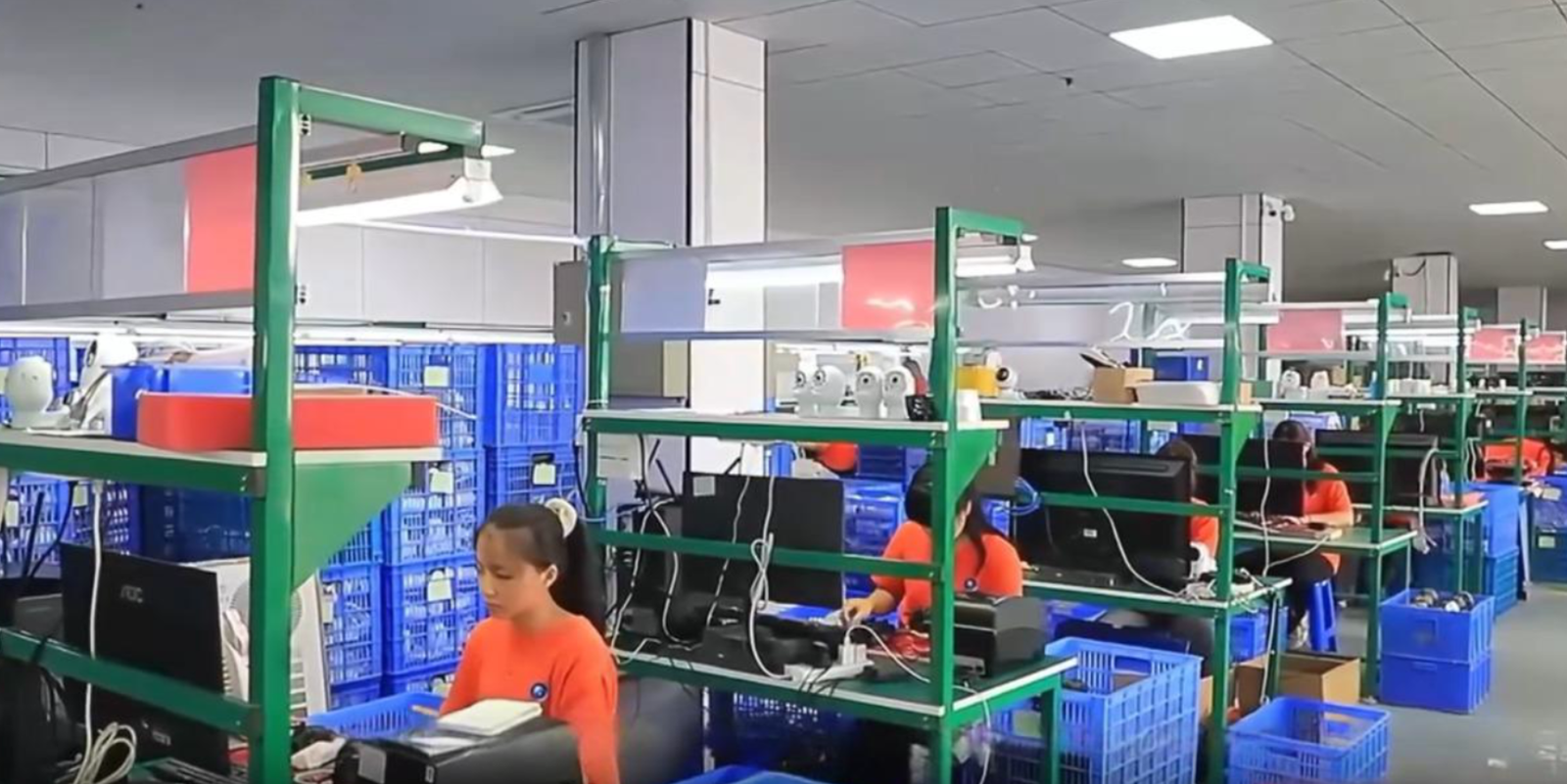
The second calculation is the one retail buyers take most seriously, because a returns reserve is money the buyer cannot spend on anything else. A platform that ships from woCyber with a disciplined outgoing-inspection regime – 100% outgoing inspection with per-batch reports archived, plus burn-in before shipment – addresses the returns question from the supply side, and buyers generally weigh that regime at least as heavily as the unit cost itself.
The retail carton is a shelf-allocation instrument before it is a marketing asset. Cartons per pallet and facings per shelf position are the two figures a category buyer enters into the planogram, and both move with chassis dimensions.
A compact 2-bay chassis occupies less shelf depth than a 4-bay unit, which means more facings in the same linear space and a lower cost per facing. That is a real advantage at the opening and volume bands, and it is the reason a smaller chassis can outperform a larger one in a retail review even when the larger unit carries better specifications. The 4-bay rung compensates differently: it earns its shelf space from a higher ticket value per facing rather than from a higher facing count.
Branding sits on top of the carton rather than replacing it. A retail program can carry the retailer’s or the distributor’s name on the enclosure by silkscreen or laser etching, on the branded user interface and boot animation, on the packaged documentation, and in the mobile app listing that is submitted under the buyer’s own developer account. None of that changes the carton cube, which is why branding is cheap to add to a retail SKU and expensive to add after the artwork has been approved.
A retail program needs more commercial structure than an integrator sale, because the retailer reserves shelf space against a supply commitment that has to hold for a selling season. Buyers qualifying a supplier can work from a comparable U.S. Customs and Border Protection import reference for the duty and entry side, and from FCC Part 15 for the equipment authorization side.
| Provision | Why a retailer asks for it | How it is settled |
|---|---|---|
| Minimum order quantity | Reconfiguration creates a fixed setup cost the buyer has to amortize | 100 units per model for reconfiguration; 1,000 units where a new PCB respin or new enclosure tooling is involved |
| Sample evaluation | The buyer needs a unit to score before committing shelf space | Samples charged at the published single-unit price, credited in full against the first bulk order |
| Tooling position | Any bespoke enclosure or injection part is a sunk cost for the buyer | Tooling amortized into the unit price or invoiced separately; ownership transfers on final payment; customer-specific tooling is not reused |
| Payment schedule | Cash flow between order placement and receipt of goods | 30% with the order, 70% against the bill of lading |
| Warranty and spares | The buyer carries a warranty reserve on its own balance sheet | Three years on hardware, with spare-part supply for the project lifecycle |
| Packaging and compliance | Retail compliance desk will not list a product without them | Retail barcodes, origin marking, WEEE and producer-responsibility labelling, documentation in the market’s language |
The provisions are not unusual individually. What matters commercially is that a retailer can only commit shelf space for a defined selling season, so the reconfiguration threshold and the sample-credit mechanism have to be understood before the first purchase order is raised rather than after the planogram is set.
A retail buyer is underwriting a supply relationship, not a single order, so the evaluation goes past the sample unit. Four checks carry most of the weight.
For a retail program spanning several price bands, buyers often consolidate on one platform family so that the app, the documentation and the warranty process stay identical across the planogram. A 4-bay platform such as products/x4-nas-server“>x4-nas-server can anchor the top of a retail range while a compact model covers the opening band, and both can be specified through the same oem-odm“>OEM/ODM program. Reading across the wider products“>product range before fixing the band structure avoids the common mistake of launching a range whose middle band duplicates a specification already stocked.
Most retail NAS programs that fall over do so in the second year rather than at launch, and the cause sits on the supply side rather than in demand.
The first failure mode is a price band that cannot be held. A SKU specified at the band’s ceiling on launch leaves no room to defend margin if freight or duty moves, and a retailer that has to reprice mid-season will delist rather than absorb the difference. The second is a spare-part gap: a three-year warranty only holds if the parts exist, and a supplier who has not committed to lifecycle spare-part supply is effectively offering a shorter warranty. The third is a packaging change that arrives late: artwork, documentation and compliance labelling all have lead time, and a packaging change that slips past the season’s cutoff means the SKU waits a full cycle for its next listing.
All three are calendar problems dressed up as commercial ones. A category review moves on fixed dates, artwork and compliance labelling have lead times of their own, and a packaging change that misses the cutoff does not delay the listing by a week – it delays it by a season. Building the retail launch plan from the review calendar backwards is what keeps the planogram slot, not the specification sheet. Read the timeline first, fix the price band second, and let the platform follow – that order is what carries a NAS SKU past its second line review.
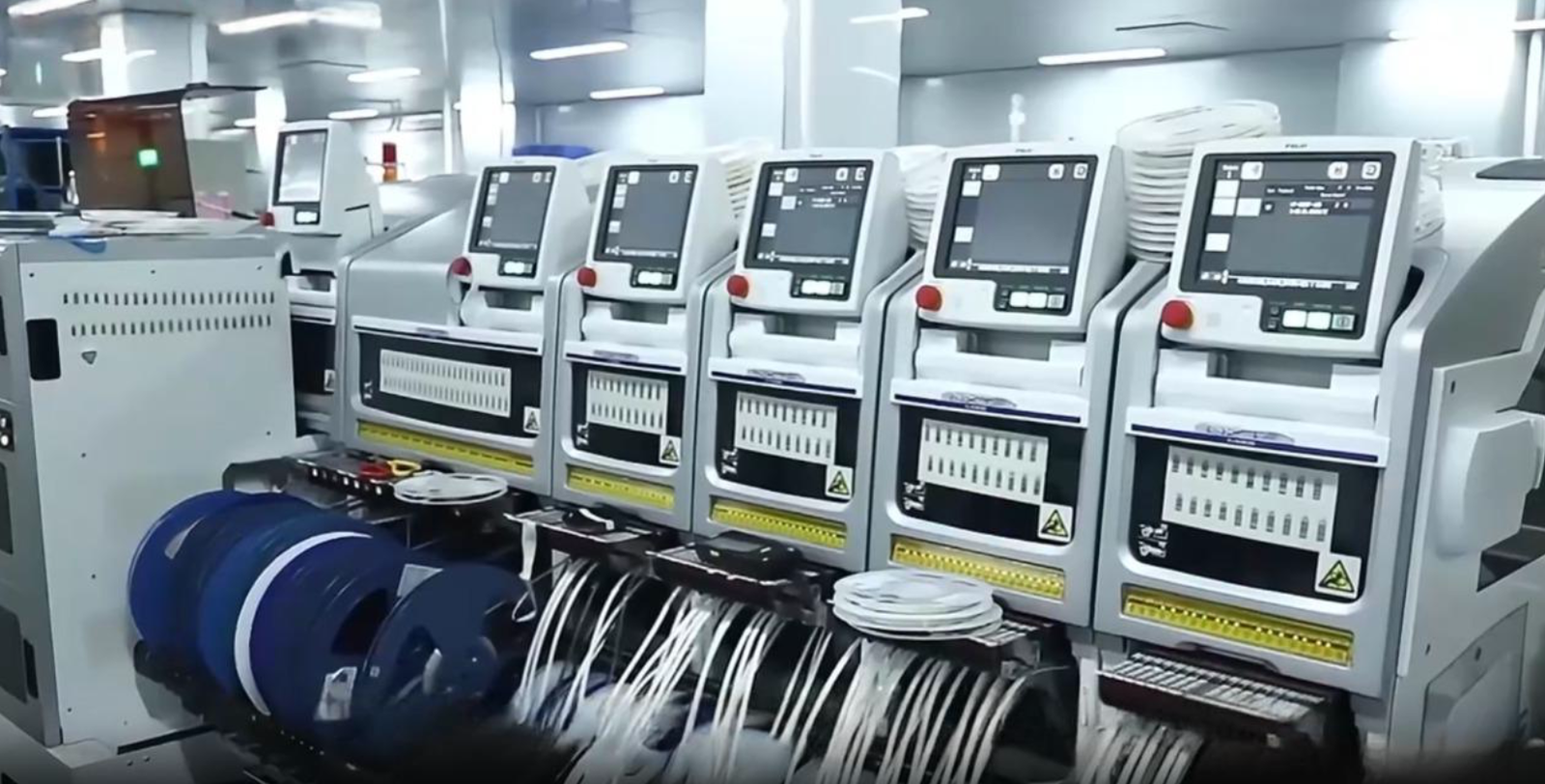
We are the factory: SMT to shipment under one roof, R&D in Beijing, mass production in Shenzhen. Factory-direct pricing without trading-company markups.
White Label NAS Program for Regional Distributors: SKU Ladder, Branding Rights and Launch Costs A white label NAS for regional distributors is…
September 30, 2026NAS Manufacturing USA: Sourcing Guide for 2026 Brands Most NAS manufacturing USA comparisons start with the assembly line. The invoice disagrees. On…
September 30, 2026NAS Manufacturer for Enterprise: 2026 Selection Checklist A procurement team that picks the storage platform and the storage supplier in the same…
Ask our export team for the OEM/ODM cooperation guide and a written quotation.